Dětské zboží
Celkem 970 produktů

Serpent Sports introduce the Spyder 1/10 rear motor Monster Truck in a true Ready to Race version !This big wheel Monster Truck can conquer any terrain with the oversized tyres . Great looks with realistic looking MT body and the large wheels / tyres. The strong and durable power system offers amazing torque and topspeed . The Spyder MT suspension comes from our competion range of vehicles and is made to last ! Superior handling in both on and offroad use. The long bigbore shocks and long durable suspensions arms eats any terrain with eas. DragonRC 2.4 GHz digital transmitter included to manage all the power ! Main features- Ready to race- Prepainted and precut MT body- Dragon-RC 2.4 GHz transmitter TX-RX - Waterproof prorammable electronic speedcontroller 45A Dragon-RC- Brushless, sensorless motor 3000KV 9T Dragon-RC- Durable metal gear servo Dragon-RC- Expert factory assembly and set-up- premounted oversized MT tyres on spoked MT wheels Dragon-RC- Spring steel transmission- Oil-filled gear differential and solid slipper clutch- High performance race geometry- Big bore 12mm RCM type shocks with dual system- Rear motor design- Durable composite chassis design- Large front and rear composite bumper FeaturesChassis and Rear Chassis skid plateComposite chassis plate with a layout allowing for a perfect weight balance, and optimal space for the electronics, battery and servo. The front kick-up angle in the chassis incorporates more clearance for racing and allow for better nose landings. The composite rear skid plate connects to the chassis plate. This connection allows you to unclip the rear end in one piece, but helps reduce the total cost of maintenance. It is also made from extremely high strength composite material. Shocktowers and Shock absorbersDurable composite front and rear shock towers, with multiple shock angle positions allowing to fine tune for varying conditions.Dual system 12mm big bore shocks with coated threaded bodies, a unique cap design, a superbly sealing o-ring and spacer package. Front bumper system The durable composite front bumper system will absorb the worst of head on crashes and will allow for save nose landings. Front wishbones and Front and Rear Track RodsThe long front wishbones are made from a super strong composite material. The arms are angled to optimize the CG and pivot on 3mm captured pins on the inside and out. The arms have 2 mounting positions for shock angle and are prepared to use an optional anti-roll bar if needed. Spring steel front and rear track rods are mounted to durable composite captured ball joints. The track Rods have L/R threading for easy adjustments. Castor blocks Steering Block The steering blocks fit 5x10x4 mm bearings. The caster blocks are very compact and strong units made from a special composite material. Steering system and AckermannThe steering system has a reverse swinging pivot system that optimizes the efficiency through all different types of corners UprightsDurable composite units. The rear hub uprights use a larger 5x14x4 outer bearing and 10x15x4 mm inner for ultimate lasting performance Wheel-axles, wheel hex, trans case, rear arms The spring steel wheel-axles utilized 12mm hex adapter to follow current market standards. The front springs steel axle is fixed, while the rear wheel-hex is a clamping aluminum version.The composite rear transmission case is light and durable. It securely holds the motor plate, differential as well as supports the rear wing mount and rear shock tower. The long and durable angled rear suspension arms are very tough units to withstand the rigors of the track and the hard landings. The rear arm offers 2 options for shock position and two mounting locations for the rear anti-roll bar if needed. Battery space mount and weight balanceThe battery is mounted perfectly in the center line of the car. Its an exact fit for saddle packs. In case of using a Shorty-pack, it can be moved to front or back to play with weight balance. Pieces of hard foam are supplied to do so and secure the battery in position. The carbon fibre battery-top-brace has a secure quick release system with handy alu twist nuts. DifferentialThe oil filled gear-differenial is a super compact, effective and durable unit. ClutchThe car features a solid slipper combined with a steel gear, to have a simple and durable system. The slipper clutch is optional. Motor plate and motor guardThe motor plate comes in anodized aluminum. Rear driveshaft system, wheel-axles The spring steel drive shafts are thin and light, yet durable. The spring steel wheel-axles are 5mm, light and durable, guided by the 2 different size of bearings, inner 10x14x4 mm and outer 5x13x4 mm. The driveshaft pin is fully captured to prevent any failure. These bearings are for sure to stand up the rigors of any track condition. Rear bumperThe rear bumper section is a very durable unit, easy to disassembe, and fits well with the rear of the body, to absorb the worst of back-end crashes. Body shell The light realistic looking MT style body, made in top quality clear polycarbonate, has a nice flowing line, steep front windscreen for down force . Ballbearings and metric FastnersHigh speed sealed stainless steel ballbearings with grease . Hard steel , mostly allen screws, roundhead and countersunk. Minimized number of different allen heads to make working on the car easier. The kit comes complete with body and wheels, full color manual and exploded views, a blank and standard set-up sheet and Serpent decals. Set-up possibilitiesWheelbase, Caster, Ackermann, Axle height Front, Front and rear camber, Front Toe-in and toe-out, Rear Inboard toe-in angle, Rear Outboard toe-in angle, Antisquat, Roll-centers, Ride height, Weight balance, Shocks for dampening and springs, shock angle, Gear ratios, Anti-roll bar thickness, Electronic placement Kit includes - Ready to Race car - Not included: TX batteries, car battery and charger 2.4 GHz transmitter with small receiverWaterproof speed controller and 9T 3000Kv brushless motorMetal gear servo 7kg
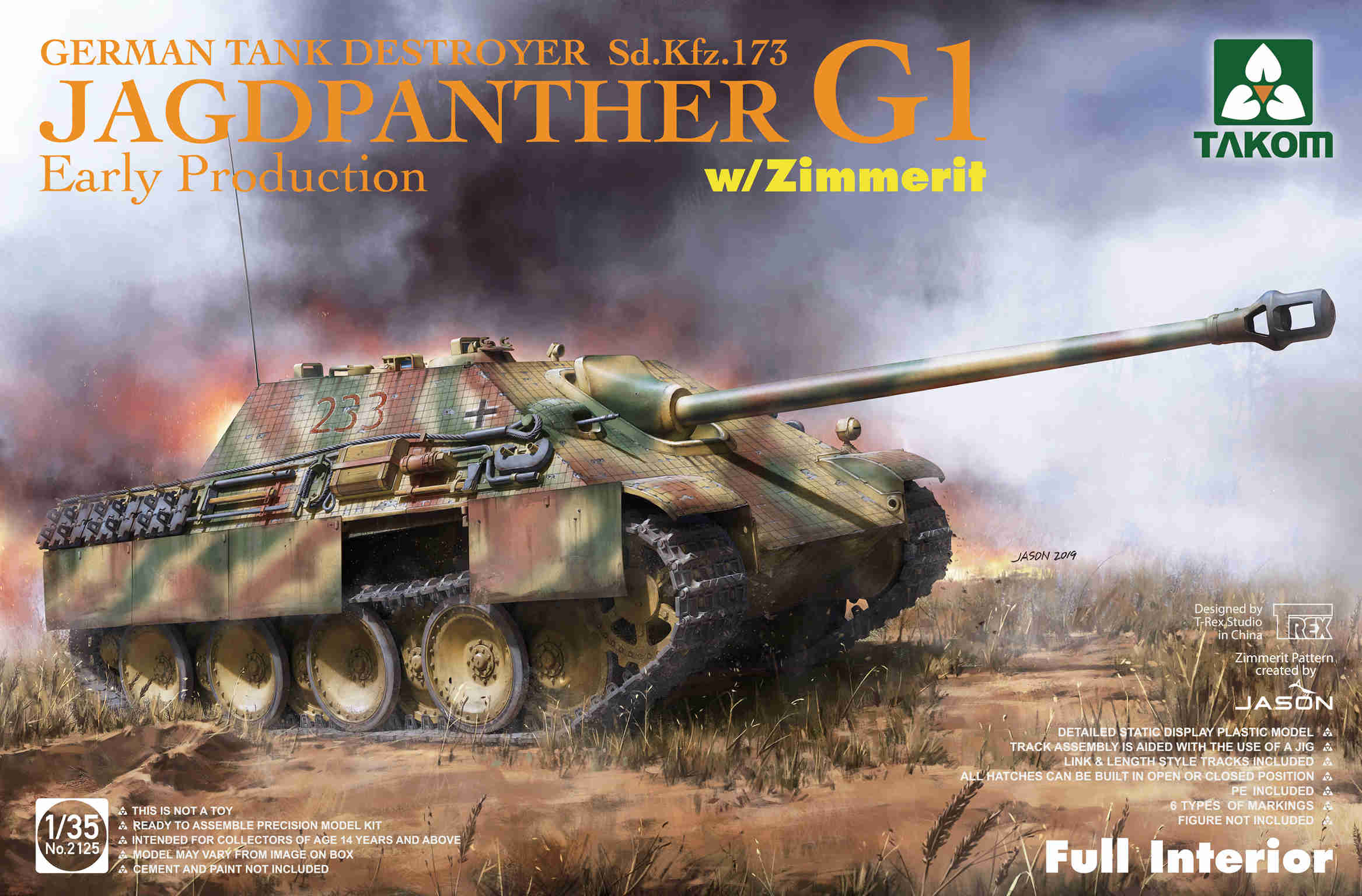
1/35 Sd.Kfz. 173 Pz.Jg. Jagdpanther. The Panzerjäger Panther Sd.Kfz. 173, or Jagdpanther, was a heavy tank destroyer based on the chassis of the Panzer V Panther and was armed with the same long-barreled 8.8 cm gun as the Tiger II or ‘King Tiger’, and a single 7.92 mm MG-34 machine gun in the front glacis plate for local defense. The Jagdpanther had a good power-to-weight ratio and a powerful main gun, which enabled it to destroy any Allied tank. Based on the existing Panther chassis, the vehicle did not suffer too many mechanical problems, and had an upgraded transmission and final drive to counter the Panther's main weakness. The Jagdpanther was powered by the 700hp Maybach HL230 P30 V-12 petrol engine and a 7 speed forward, 1-speed reverse transmission system with a maximum speed of 46 km/h (28.6 mph) and a range of about 200 kilometers (99 miles). It was manned by a crew of five: a driver, radio-operator, commander, gunner and a loader. Two main variants can be distinguished, the earlier (1944 model) G1 with a small internally-bolted main gun mantlet and a modified Panther A engine deck, and the later (1945 model) G2 with a larger, externally-bolted mantlet and a modified Panther G engine deck, though late G1s also had a larger mantlet. Early Jagdpanthers had two vision openings for the driver, whereas late versions had only one. The main gun originally had a monobloc gun barrel, but later versions were equipped with the PaK 43/4 gun with a two-part barrel. Early G1s (to September 1944) were given a distinctive pattern of Zimmerit anti-magnetic mine coating.
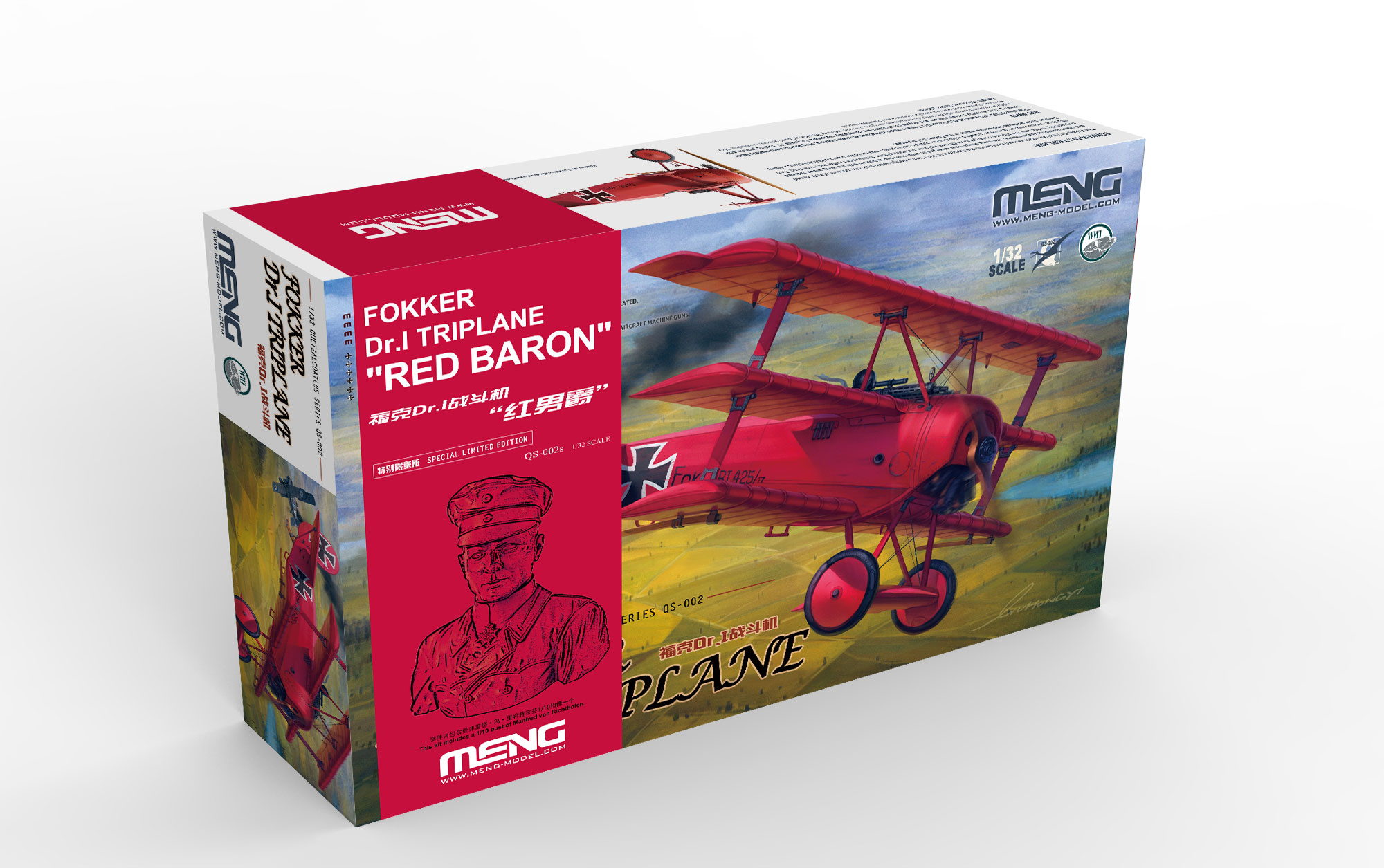
1/32 Fokker Dr.I Triplane "Red Baron" includes a 1/10 resin bust. More than one hundred years ago, Europe was in a state of devastation. Farms and pastures were ruined by shell craters and muddy water. Laughter in bars was replaced by people’s sobbing. Bank managers became soldiers hiding in the trenches and primary school teachers plunged bayonets into others’ chests. Everyone on the battlefield was surrounded by the angriest roars and the most vicious curses. But even in the desperate twilight, there was one gem shining brilliantly. Its brightness was so dazzling that it’s still remembered by the once warring parties. Manfred von Richthofen, the cavalry officer who learn to fly in 1915, became the top-scoring ace of World War I by winning 80 air combat victories in less than two years. His iconic red aircraft was well known to both warring parties. The Germans rejoiced in it, and the Allies were convinced by his exquisite combat skills and precious chivalry. As a legend, his death was dramatic because of the bizarre possibilities. The story of the “Red Baron” has gone across time and beyond hatred and is still being told today. The QS-002s Fokker Dr.I Triplane “Red Baron” is a limited edition product based on the MENG QS-002 Fokker Dr.I Triplane kit. This kit includes a 1/10 resin bust of the “Red Baron” Manfred von Richthofen and a Fokker Dr.I Triplane kit. This Manfred von Richthofen bust features calm and confident facial expressions. The figure wears a leather flight jacket over the Imperial German Army uniform. He wears an M1910 Officer Visor Cap on his head and a Blue Max medal on the neckline. This is the most well-known image of the “Red Baron”. This product is limited to 1,000 kits.
1/35 Sd.Kfz. 173 Pz.Jg. Jagdpanther. The Panzerjäger Panther Sd.Kfz. 173, or Jagdpanther, was a heavy tank destroyer based on the chassis of the Panzer V Panther and was armed with the same long-barreled 8.8 cm gun as the Tiger II or ‘King Tiger’, and a single 7.92 mm MG-34 machine gun in the front glacis plate for local defense. The Jagdpanther had a good power-to-weight ratio and a powerful main gun, which enabled it to destroy any Allied tank. Based on the existing Panther chassis, the vehicle did not suffer too many mechanical problems, and had an upgraded transmission and final drive to counter the Panther's main weakness. The Jagdpanther was powered by the 700hp Maybach HL230 P30 V-12 petrol engine and a 7 speed forward, 1-speed reverse transmission system with a maximum speed of 46 km/h (28.6 mph) and a range of about 200 kilometers (99 miles). It was manned by a crew of five: a driver, radio-operator, commander, gunner and a loader. Two main variants can be distinguished, the earlier (1944 model) G1 with a small internally-bolted main gun mantlet and a modified Panther A engine deck, and the later (1945 model) G2 with a larger, externally-bolted mantlet and a modified Panther G engine deck, though late G1s also had a larger mantlet. Early Jagdpanthers had two vision openings for the driver, whereas late versions had only one. The main gun originally had a monobloc gun barrel, but later versions were equipped with the PaK 43/4 gun with a two-part barrel. Early G1s (to September 1944) were given a distinctive pattern of Zimmerit anti-magnetic mine coating.
1/32 Fokker Dr.I Triplane "Red Baron" includes a 1/10 resin bust. More than one hundred years ago, Europe was in a state of devastation. Farms and pastures were ruined by shell craters and muddy water. Laughter in bars was replaced by people’s sobbing. Bank managers became soldiers hiding in the trenches and primary school teachers plunged bayonets into others’ chests. Everyone on the battlefield was surrounded by the angriest roars and the most vicious curses. But even in the desperate twilight, there was one gem shining brilliantly. Its brightness was so dazzling that it’s still remembered by the once warring parties. Manfred von Richthofen, the cavalry officer who learn to fly in 1915, became the top-scoring ace of World War I by winning 80 air combat victories in less than two years. His iconic red aircraft was well known to both warring parties. The Germans rejoiced in it, and the Allies were convinced by his exquisite combat skills and precious chivalry. As a legend, his death was dramatic because of the bizarre possibilities. The story of the “Red Baron” has gone across time and beyond hatred and is still being told today. The QS-002s Fokker Dr.I Triplane “Red Baron” is a limited edition product based on the MENG QS-002 Fokker Dr.I Triplane kit. This kit includes a 1/10 resin bust of the “Red Baron” Manfred von Richthofen and a Fokker Dr.I Triplane kit. This Manfred von Richthofen bust features calm and confident facial expressions. The figure wears a leather flight jacket over the Imperial German Army uniform. He wears an M1910 Officer Visor Cap on his head and a Blue Max medal on the neckline. This is the most well-known image of the “Red Baron”. This product is limited to 1,000 kits.

CharakteristikaS tímto modelem auta si kluci a holky od 9 let užijí akční zábavu jako ve filmech Fast and Furious. Postavte si autentické detaily modelu LEGO® Technic (42204) Fast and Furious Toyota Supra MK4 a pak si užijte ještě více zábavy a prozkoumejte jeho realistické detaily. Tato zmenšená verze slavného filmového vozu obsahuje 6válcový motor, řízení, otevírací kapotu a odnímatelnou horní střechu Targa. V kufru dokonce najdete 2 lahve NOS – přesně takové, které se objevily v napínavých scénách prvního filmu Fast and Furious.Tato stavebnice auta Supra představuje kreativní dárek pro děti, které milují auta z filmů Fast and Furious. Je to také skvělá stavebnice na společné stavění pro všechny fanoušky této dynamické filmové série.Stavebnice LEGOTechnic se pyšní realistickým pohybem a seznámí mladé stavitele se světem techniky. Děti se můžou těšit na intuitivní stavitelské dobrodružství s aplikací LEGO Builder. V ní si lze přibližovat, otáčet modely ve 3D, ukládat stavebnice a sledovat postup.Vlastnosti Stavebnice auta pro děti od 9 let – Vrhněte se do akce a postavte si jedno z nejslavnějších aut filmové historie se stavebnicí LEGO® Technic Fast and Furious Toyota Supra MK4 Auto Toyota Supra – Tento model sportovního vozu se pyšní řadou detailů a zábavných odkazů, které potěší fanoušky filmů Fast and Furious, včetně 2 lahví NOS v kufru vozu Propracovaný model auta – Sestavte 6válcový motor, řízení, otevírací kapotu a odnímatelnou střechu Targa a připomeňte si své oblíbené scény z filmů Fast and Furious Stavějte společně – Tato stavebnice auta LEGO® představuje skvělý způsob, jak se můžou rodiny a přátelé podělit o svou lásku k filmům Fast and Furious během stavění modelu, a zároveň si připomenou oblíbené filmové scény Zábavná hračka pro děti – Tato stavebnice představuje kreativní dárek pro kluky a holky, kteří milují film yFast and Furious nebo auta LEGO® Technic Úvod do světa techniky – Modely LEGO® Technic nabízejí realistické mechanismy a funkce pohybu, které uvedou mladé stavitele do světa techniky Rozměry – Stavebnice se skládá z 810 dílků a model vozidla Toyota Supra měří přes 8 cm na výšku, 30 cm na délku a 13 cm na šířku
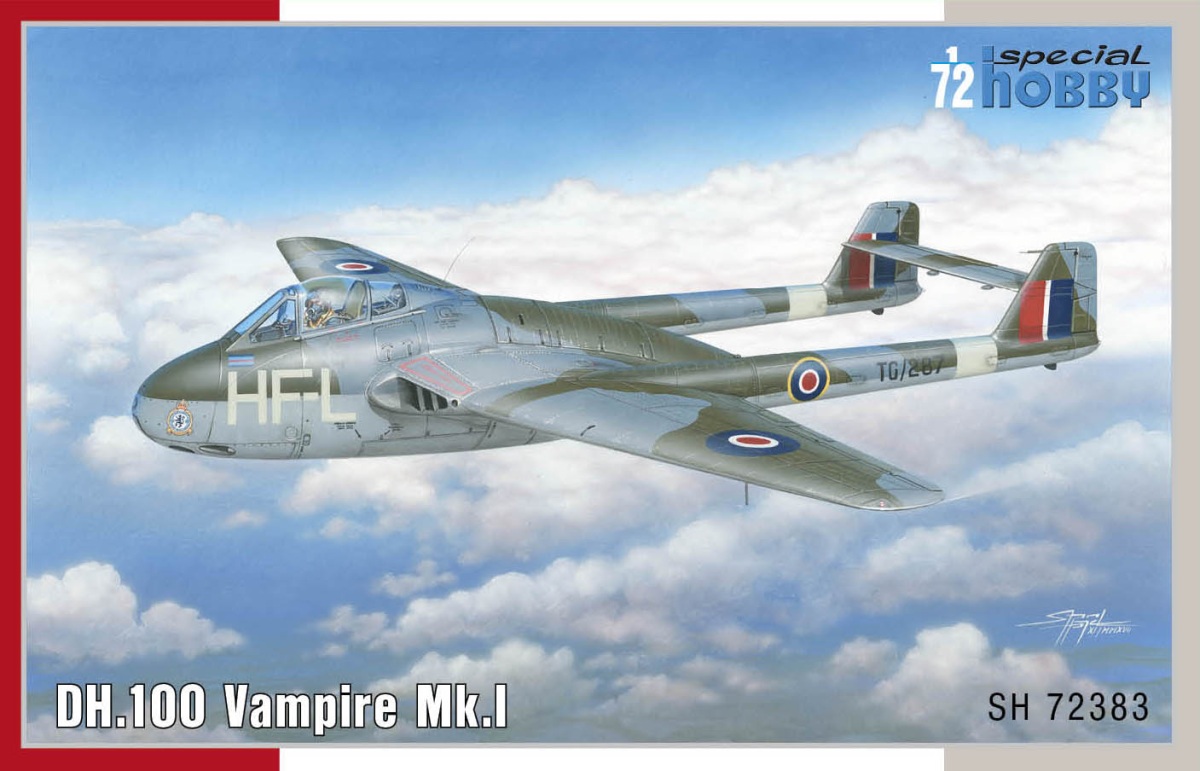
Plastikový model letadla 1/72 DH.100 Vampire Mk.I RAF, RAAF and Armée de l. The kit’s plastic parts come on three grey styrene sprues and two clear sprues which are accompanied by a fret of photo-etches. The first clear sprue offers the standard, late type of the clear hood and also the original, early style canopy typical for the first Mk.Is. This part, however, was not manufactured to our standards, which we regret of course, and thus we have decided to rework the design completely and produce a second sprue with much more exact rendition of the early hood. The decal sheet contains markings for three RAF machines which differ by having various national markings on them, another machine with serial A78-1which was flown by the RAAF down under and the final option brings a very special French machine, in fact a remotely controlled drone named Porthos Originally, the Vampire Mk.I kit was to offer schemes for just two operators of the type, the RAF and RAAF. It has been decided, however, that a new marking option will be offered in this boxing to make it more attractive for a wider range of modellers. The new addition to the kit is a quite eye-catching machine wearing French colours and the title of this boxing has also been updated.
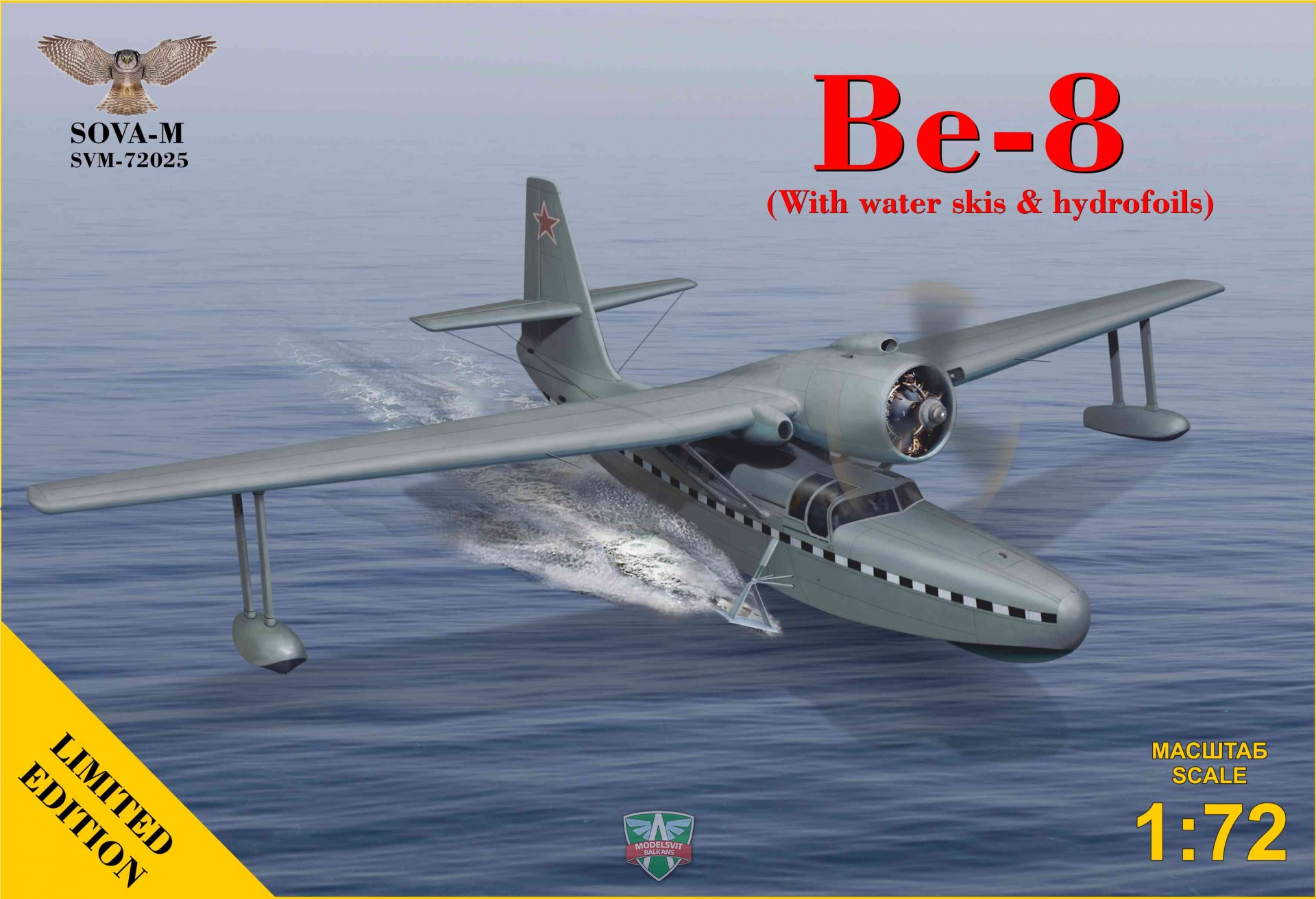
1/72 Be-8 amphibian aircraft (with water skis & hydrofoils). The Beriev Be-8 (USAF/DoD reporting name “Type 33”, NATO reporting name “Mole”), was built by the Soviet Beriev OKB in 1947. It was a passenger/liaison amphibian aircraft with a layout similar to the Be-4 but substantially larger and heavier. It was a single engine parasol with the wing installed on a thin pylon and a pair of short struts. Compared to the Be-4, the Be-8 was equipped with retractable landing gear, and pilot and passenger cabins had heating utilizing engine heat. The Be-8 was intended as a civil aircraft and carried no armament. First flight was on December 3, demonstrating good performance. Two experimental aircraft were built, and one was demonstrated during 1951 Soviet Aviation Day at Tushino.One of Be-8 was equipped with hydrofoils, developed at TsAGI. These “Underwater Wings” were installed on landing gear struts and pushed aircraft above the water well before it could be done by the wing lift force. As a result, takeoff was much easier and imposed less punishment on the hull from the waves. Despite very effective during takeoff hydrofoils had negative impact on flight speed. Construction of retractable hydrofoils was not ready, and the concept did not find practical applications.

1/72 Be-8 passenger amphibian aircraft. The Beriev Be-8 (USAF/DoD reporting name “Type 33”, NATO reporting name “Mole”), was built by the Soviet Beriev OKB in 1947. It was a passenger/liaison amphibian aircraft with a layout similar to the Be-4 but substantially larger and heavier. It was a single engine parasol with the wing installed on a thin pylon and a pair of short struts. Compared to the Be-4, the Be-8 was equipped with retractable landing gear, and pilot and passenger cabins had heating utilizing engine heat. The Be-8 was intended as a civil aircraft and carried no armament. First flight was on December 3, demonstrating good performance. Two experimental aircraft were built, and one was demonstrated during 1951 Soviet Aviation Day at Tushino.One of Be-8 was equipped with hydrofoils, developed at TsAGI. These “Underwater Wings” were installed on landing gear struts and pushed aircraft above the water well before it could be done by the wing lift force. As a result, takeoff was much easier and imposed less punishment on the hull from the waves. Despite very effective during takeoff hydrofoils had negative impact on flight speed. Construction of retractable hydrofoils was not ready, and the concept did not find practical applications.
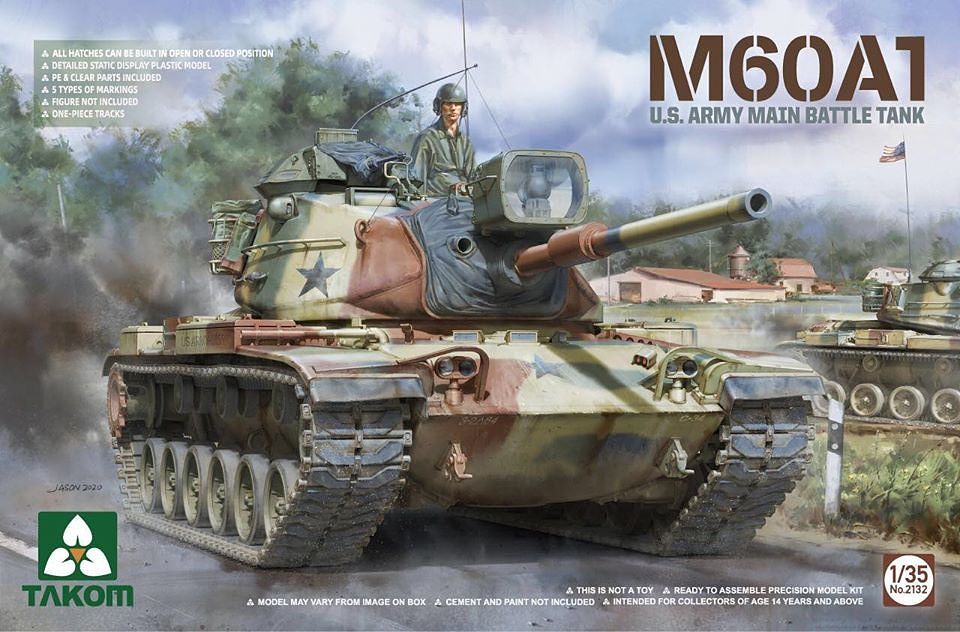
1/35 M60A1 Patton U.S. Army Main Battle Tank. The M60 is a main battle tank developed by the United States as a successor to the M46, M47, and M48 in order to combat the new T-54A tank fielded by the Soviet Union. The M60A1 tank is an improved mass-produced version of the M60, with production beginning in 1960, four years after the prototype of the original M60 was completed. The turret was changed from the M60's "turtleshell" shape to a thicker shape with front armor and a wider internal volume. The tank's excellent maneuverability, powerful engine and 105mm tank gun L7A1 made it an excellent tank with a good balance of offense and defense; it has become the standard main battle tank for the U.S. military and other Western countries. About 20,000 of this tank have been made, and it has become the best-selling tank. Takom's kit features a main hatch that opens and closes after assembly, with crawler belt tracks, clear and photo-etched parts, and markings for five versions. Please note that figures are not included. [Includes]: Clear parts, photo-etched parts, markings for 5 versions
Plastikový model letadla 1/72 DH.100 Vampire Mk.I RAF, RAAF and Armée de l. The kit’s plastic parts come on three grey styrene sprues and two clear sprues which are accompanied by a fret of photo-etches. The first clear sprue offers the standard, late type of the clear hood and also the original, early style canopy typical for the first Mk.Is. This part, however, was not manufactured to our standards, which we regret of course, and thus we have decided to rework the design completely and produce a second sprue with much more exact rendition of the early hood. The decal sheet contains markings for three RAF machines which differ by having various national markings on them, another machine with serial A78-1which was flown by the RAAF down under and the final option brings a very special French machine, in fact a remotely controlled drone named Porthos Originally, the Vampire Mk.I kit was to offer schemes for just two operators of the type, the RAF and RAAF. It has been decided, however, that a new marking option will be offered in this boxing to make it more attractive for a wider range of modellers. The new addition to the kit is a quite eye-catching machine wearing French colours and the title of this boxing has also been updated.

1/72 BHU-6B / UF-2 "Albatross" (Japan Maritime Self-Defense Force). The Beriev Be-8 (USAF/DoD reporting name “Type 33”, NATO reporting name “Mole”), was built by the Soviet Beriev OKB in 1947. It was a passenger/liaison amphibian aircraft with a layout similar to the Be-4 but substantially larger and heavier. It was a single engine parasol with the wing installed on a thin pylon and a pair of short struts. Compared to the Be-4, the Be-8 was equipped with retractable landing gear, and pilot and passenger cabins had heating utilizing engine heat. The Be-8 was intended as a civil aircraft and carried no armament. First flight was on December 3, demonstrating good performance. Two experimental aircraft were built, and one was demonstrated during 1951 Soviet Aviation Day at Tushino.One of Be-8 was equipped with hydrofoils, developed at TsAGI. These “Underwater Wings” were installed on landing gear struts and pushed aircraft above the water well before it could be done by the wing lift force. As a result, takeoff was much easier and imposed less punishment on the hull from the waves. Despite very effective during takeoff hydrofoils had negative impact on flight speed. Construction of retractable hydrofoils was not ready, and the concept did not find practical applications.

1/72 KDA-2 type 88-1 scout. The Beriev Be-8 (USAF/DoD reporting name “Type 33”, NATO reporting name “Mole”), was built by the Soviet Beriev OKB in 1947. It was a passenger/liaison amphibian aircraft with a layout similar to the Be-4 but substantially larger and heavier. It was a single engine parasol with the wing installed on a thin pylon and a pair of short struts. Compared to the Be-4, the Be-8 was equipped with retractable landing gear, and pilot and passenger cabins had heating utilizing engine heat. The Be-8 was intended as a civil aircraft and carried no armament. First flight was on December 3, demonstrating good performance. Two experimental aircraft were built, and one was demonstrated during 1951 Soviet Aviation Day at Tushino.One of Be-8 was equipped with hydrofoils, developed at TsAGI. These “Underwater Wings” were installed on landing gear struts and pushed aircraft above the water well before it could be done by the wing lift force. As a result, takeoff was much easier and imposed less punishment on the hull from the waves. Despite very effective during takeoff hydrofoils had negative impact on flight speed. Construction of retractable hydrofoils was not ready, and the concept did not find practical applications.

1/72 KDA-2 type 88-2 scout. The Beriev Be-8 (USAF/DoD reporting name “Type 33”, NATO reporting name “Mole”), was built by the Soviet Beriev OKB in 1947. It was a passenger/liaison amphibian aircraft with a layout similar to the Be-4 but substantially larger and heavier. It was a single engine parasol with the wing installed on a thin pylon and a pair of short struts. Compared to the Be-4, the Be-8 was equipped with retractable landing gear, and pilot and passenger cabins had heating utilizing engine heat. The Be-8 was intended as a civil aircraft and carried no armament. First flight was on December 3, demonstrating good performance. Two experimental aircraft were built, and one was demonstrated during 1951 Soviet Aviation Day at Tushino.One of Be-8 was equipped with hydrofoils, developed at TsAGI. These “Underwater Wings” were installed on landing gear struts and pushed aircraft above the water well before it could be done by the wing lift force. As a result, takeoff was much easier and imposed less punishment on the hull from the waves. Despite very effective during takeoff hydrofoils had negative impact on flight speed. Construction of retractable hydrofoils was not ready, and the concept did not find practical applications.

1/72 KDA-2 type 88 light bomber. The Beriev Be-8 (USAF/DoD reporting name “Type 33”, NATO reporting name “Mole”), was built by the Soviet Beriev OKB in 1947. It was a passenger/liaison amphibian aircraft with a layout similar to the Be-4 but substantially larger and heavier. It was a single engine parasol with the wing installed on a thin pylon and a pair of short struts. Compared to the Be-4, the Be-8 was equipped with retractable landing gear, and pilot and passenger cabins had heating utilizing engine heat. The Be-8 was intended as a civil aircraft and carried no armament. First flight was on December 3, demonstrating good performance. Two experimental aircraft were built, and one was demonstrated during 1951 Soviet Aviation Day at Tushino.One of Be-8 was equipped with hydrofoils, developed at TsAGI. These “Underwater Wings” were installed on landing gear struts and pushed aircraft above the water well before it could be done by the wing lift force. As a result, takeoff was much easier and imposed less punishment on the hull from the waves. Despite very effective during takeoff hydrofoils had negative impact on flight speed. Construction of retractable hydrofoils was not ready, and the concept did not find practical applications.
1/72 Be-8 amphibian aircraft (with water skis & hydrofoils). The Beriev Be-8 (USAF/DoD reporting name “Type 33”, NATO reporting name “Mole”), was built by the Soviet Beriev OKB in 1947. It was a passenger/liaison amphibian aircraft with a layout similar to the Be-4 but substantially larger and heavier. It was a single engine parasol with the wing installed on a thin pylon and a pair of short struts. Compared to the Be-4, the Be-8 was equipped with retractable landing gear, and pilot and passenger cabins had heating utilizing engine heat. The Be-8 was intended as a civil aircraft and carried no armament. First flight was on December 3, demonstrating good performance. Two experimental aircraft were built, and one was demonstrated during 1951 Soviet Aviation Day at Tushino.One of Be-8 was equipped with hydrofoils, developed at TsAGI. These “Underwater Wings” were installed on landing gear struts and pushed aircraft above the water well before it could be done by the wing lift force. As a result, takeoff was much easier and imposed less punishment on the hull from the waves. Despite very effective during takeoff hydrofoils had negative impact on flight speed. Construction of retractable hydrofoils was not ready, and the concept did not find practical applications.
1/72 Be-8 passenger amphibian aircraft. The Beriev Be-8 (USAF/DoD reporting name “Type 33”, NATO reporting name “Mole”), was built by the Soviet Beriev OKB in 1947. It was a passenger/liaison amphibian aircraft with a layout similar to the Be-4 but substantially larger and heavier. It was a single engine parasol with the wing installed on a thin pylon and a pair of short struts. Compared to the Be-4, the Be-8 was equipped with retractable landing gear, and pilot and passenger cabins had heating utilizing engine heat. The Be-8 was intended as a civil aircraft and carried no armament. First flight was on December 3, demonstrating good performance. Two experimental aircraft were built, and one was demonstrated during 1951 Soviet Aviation Day at Tushino.One of Be-8 was equipped with hydrofoils, developed at TsAGI. These “Underwater Wings” were installed on landing gear struts and pushed aircraft above the water well before it could be done by the wing lift force. As a result, takeoff was much easier and imposed less punishment on the hull from the waves. Despite very effective during takeoff hydrofoils had negative impact on flight speed. Construction of retractable hydrofoils was not ready, and the concept did not find practical applications.
1/35 M60A1 Patton U.S. Army Main Battle Tank. The M60 is a main battle tank developed by the United States as a successor to the M46, M47, and M48 in order to combat the new T-54A tank fielded by the Soviet Union. The M60A1 tank is an improved mass-produced version of the M60, with production beginning in 1960, four years after the prototype of the original M60 was completed. The turret was changed from the M60's "turtleshell" shape to a thicker shape with front armor and a wider internal volume. The tank's excellent maneuverability, powerful engine and 105mm tank gun L7A1 made it an excellent tank with a good balance of offense and defense; it has become the standard main battle tank for the U.S. military and other Western countries. About 20,000 of this tank have been made, and it has become the best-selling tank. Takom's kit features a main hatch that opens and closes after assembly, with crawler belt tracks, clear and photo-etched parts, and markings for five versions. Please note that figures are not included. [Includes]: Clear parts, photo-etched parts, markings for 5 versions
1/72 BHU-6B / UF-2 "Albatross" (Japan Maritime Self-Defense Force). The Beriev Be-8 (USAF/DoD reporting name “Type 33”, NATO reporting name “Mole”), was built by the Soviet Beriev OKB in 1947. It was a passenger/liaison amphibian aircraft with a layout similar to the Be-4 but substantially larger and heavier. It was a single engine parasol with the wing installed on a thin pylon and a pair of short struts. Compared to the Be-4, the Be-8 was equipped with retractable landing gear, and pilot and passenger cabins had heating utilizing engine heat. The Be-8 was intended as a civil aircraft and carried no armament. First flight was on December 3, demonstrating good performance. Two experimental aircraft were built, and one was demonstrated during 1951 Soviet Aviation Day at Tushino.One of Be-8 was equipped with hydrofoils, developed at TsAGI. These “Underwater Wings” were installed on landing gear struts and pushed aircraft above the water well before it could be done by the wing lift force. As a result, takeoff was much easier and imposed less punishment on the hull from the waves. Despite very effective during takeoff hydrofoils had negative impact on flight speed. Construction of retractable hydrofoils was not ready, and the concept did not find practical applications.
1/72 KDA-2 type 88-1 scout. The Beriev Be-8 (USAF/DoD reporting name “Type 33”, NATO reporting name “Mole”), was built by the Soviet Beriev OKB in 1947. It was a passenger/liaison amphibian aircraft with a layout similar to the Be-4 but substantially larger and heavier. It was a single engine parasol with the wing installed on a thin pylon and a pair of short struts. Compared to the Be-4, the Be-8 was equipped with retractable landing gear, and pilot and passenger cabins had heating utilizing engine heat. The Be-8 was intended as a civil aircraft and carried no armament. First flight was on December 3, demonstrating good performance. Two experimental aircraft were built, and one was demonstrated during 1951 Soviet Aviation Day at Tushino.One of Be-8 was equipped with hydrofoils, developed at TsAGI. These “Underwater Wings” were installed on landing gear struts and pushed aircraft above the water well before it could be done by the wing lift force. As a result, takeoff was much easier and imposed less punishment on the hull from the waves. Despite very effective during takeoff hydrofoils had negative impact on flight speed. Construction of retractable hydrofoils was not ready, and the concept did not find practical applications.
1/72 KDA-2 type 88-2 scout. The Beriev Be-8 (USAF/DoD reporting name “Type 33”, NATO reporting name “Mole”), was built by the Soviet Beriev OKB in 1947. It was a passenger/liaison amphibian aircraft with a layout similar to the Be-4 but substantially larger and heavier. It was a single engine parasol with the wing installed on a thin pylon and a pair of short struts. Compared to the Be-4, the Be-8 was equipped with retractable landing gear, and pilot and passenger cabins had heating utilizing engine heat. The Be-8 was intended as a civil aircraft and carried no armament. First flight was on December 3, demonstrating good performance. Two experimental aircraft were built, and one was demonstrated during 1951 Soviet Aviation Day at Tushino.One of Be-8 was equipped with hydrofoils, developed at TsAGI. These “Underwater Wings” were installed on landing gear struts and pushed aircraft above the water well before it could be done by the wing lift force. As a result, takeoff was much easier and imposed less punishment on the hull from the waves. Despite very effective during takeoff hydrofoils had negative impact on flight speed. Construction of retractable hydrofoils was not ready, and the concept did not find practical applications.
1/72 KDA-2 type 88 light bomber. The Beriev Be-8 (USAF/DoD reporting name “Type 33”, NATO reporting name “Mole”), was built by the Soviet Beriev OKB in 1947. It was a passenger/liaison amphibian aircraft with a layout similar to the Be-4 but substantially larger and heavier. It was a single engine parasol with the wing installed on a thin pylon and a pair of short struts. Compared to the Be-4, the Be-8 was equipped with retractable landing gear, and pilot and passenger cabins had heating utilizing engine heat. The Be-8 was intended as a civil aircraft and carried no armament. First flight was on December 3, demonstrating good performance. Two experimental aircraft were built, and one was demonstrated during 1951 Soviet Aviation Day at Tushino.One of Be-8 was equipped with hydrofoils, developed at TsAGI. These “Underwater Wings” were installed on landing gear struts and pushed aircraft above the water well before it could be done by the wing lift force. As a result, takeoff was much easier and imposed less punishment on the hull from the waves. Despite very effective during takeoff hydrofoils had negative impact on flight speed. Construction of retractable hydrofoils was not ready, and the concept did not find practical applications.
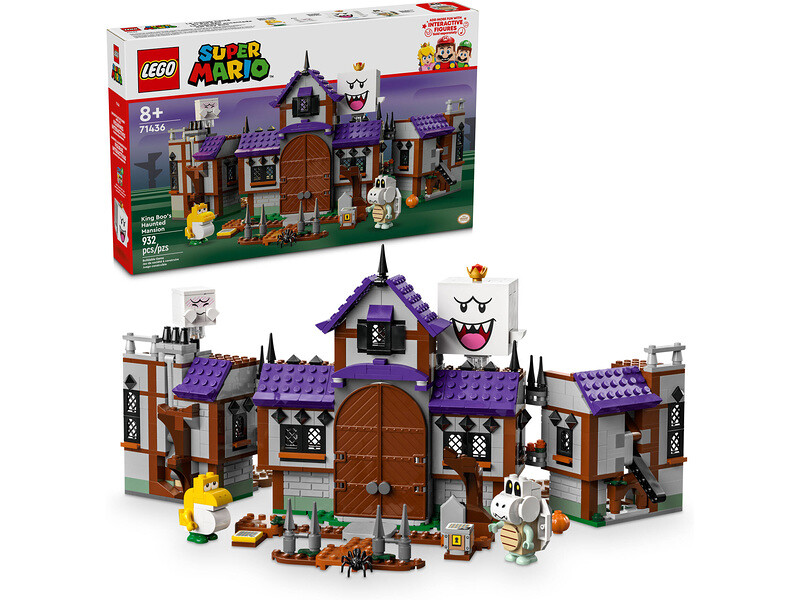
CharakteristikaSetkejte se s přízračnými postavami a najděte klíč k truhle s pokladem v setu King Boo a strašidelné sídlo (71436) z řady LEGO® Super Mario™. Tato dobrodružná sada představuje skvělý dárek pro kluky, holky a milovníky videoher od 8 let. Součástí je sestavitelný strašidelný dům, který lze otevřít, a pro snadný přístup k hravým detailům, jako je zvedací pohovka a knihovna s funkcí odhalení klíče. Součástí jsou také 4 figurky LEGO Super Mario – King Boo, Yellow Baby Yoshi, Dry Bones a Boo.Přidejte figurku LEGO® Mario™, LEGO® Luigi™ nebo LEGO® Peach™ (ze setů 71439, 71440 nebo 71441 – prodávají se samostatně) a pusťte se do interaktivního hraní. Pomozte postavičce posbírat odměny z kostky s mincemi, kostky truhly s pokladem a kostky klíče, porazte Booa a Dry Bonese, svrhněte King Booa ze stolu na nádvoří a nakonec otevřete truhlu s pokladem.Návod na stavění pro tento sběratelský set Nintendo® najdete v doprovodné aplikaci LEGO Super Mario, ve které najdete také kreativní inspiraci na stavění a hraní.Vlastnosti Strašidelný dům LEGO® Super Mario™ pro děti – Prozkoumejte sběratelský set Nintendo® King Boo a strašidelné sídlo, bojujte s přízračnými nepřáteli a najděte klíč k truhle s pokladem Součástí jsou 4 figurky LEGO® Super Mario™ – King Boo, Yellow Baby Yoshi, Dry Bones a Boo Dobrodružný set – Sídlo z kostek LEGO® lze otevřít pro lepší přístup při hraní a obsahuje zvedací pohovku, knihovnu s funkcí odhalení klíče, a navíc kostku s mincemi, kostku truhly s pokladem a kostku klíče Interaktivní digitální hra – Pomozte LEGO® Mariovi, LEGO® Luigimu nebo LEGO® Peach™ (figurky nejsou součástí balení) najít klíč k truhle s pokladem, svrhnout King Booa ze stolu na nádvoří a užijte si celou řadu dalších funkcí Pomocná ruka – Stáhněte si doprovodnou aplikaci LEGO® Super Mario™, která obsahuje návody na stavění, kreativní tipy a spoustu dalšího. Seznam kompatibilních zařízení s operačním systémem Android a iOS najdete na stránce LEGO.com/devicecheck Inspirace pro dětskou fantazii – Sety LEGO® Super Mario™ umožňují samostatné i týmové hraní, přináší hodiny zábavy při hraní na postavy, sbírání digitálních mincí a zábavné možnosti v podobě rozšiřování a přestavování Rozměry – Tento set sídla se skládá z 932 dílků a měří přes 18 cm na výšku, 23 cm na šířku a 19 cm do hloubky a lze ho zkombinovat s dalšími sety LEGO® Super Mario™ (prodávají se samostatně)
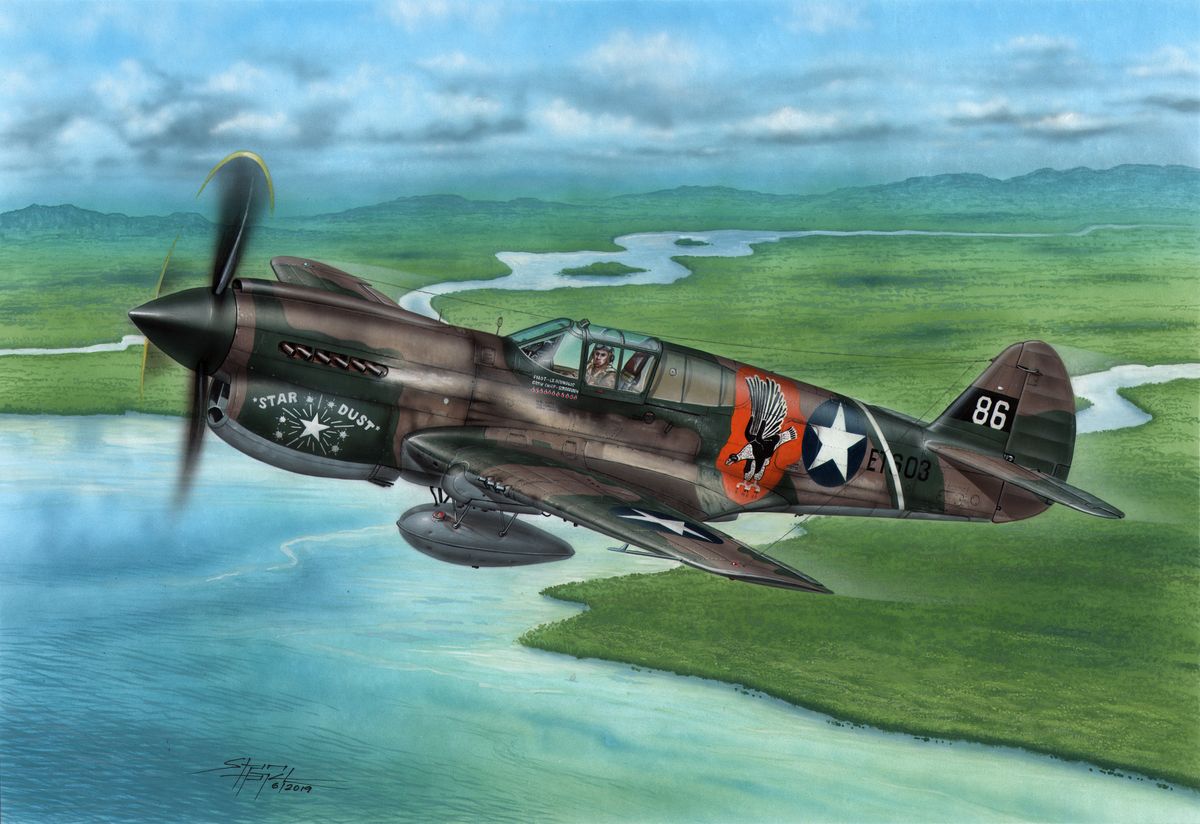
Plastikový model letadla 1/7 2P-40E Warhawk 'Claws and Teeth' . The very icon of US WW2 aviation, the Warhawk model E. The kit contains – two grey styrene sprues, one sprue of clear plastic, full colour instruction booklet and decal sheet with markings for four really eye-catching liveries. Higly accurate and nicely detailed model, the best of Warhawks in this scale Easy assembly Incredible price Decals printed by Cartograf cater for two machines as flown from China-based airfields and another two operated from Australia, all of them wearing highly interesting markings and colours, with remarkable operation history and flown by USAAF ace pilots. Three of the hand picked machines wear viciously-looking shark jaws, the fourth one (depicted on the kit’s box) was adorned with a large bird of prey on its rear fuselage and distinctive motifs on either side of its nose Wide range of CMK accessories available, including pilot/mechanic figures. Country of origin: USA / WWII
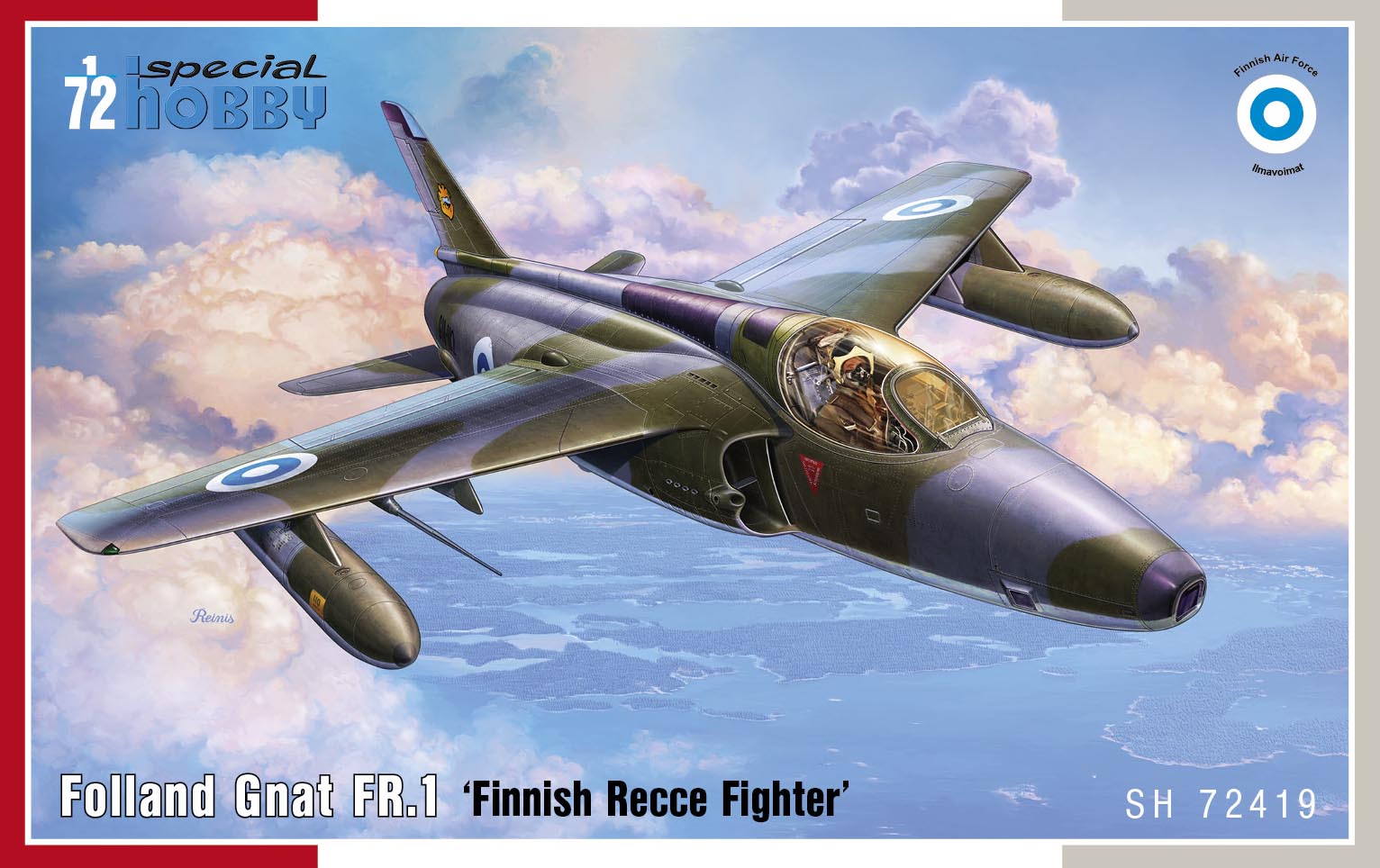
Plastikový model letadla 1/72 Folland Gnat FR.1 Finnish Recce Fighter. The Folland Gnat fighter aircraft was operated mainly by the military of Finland and India. Two of the Finnish airframes were delivered in the Gnat FR.1 reconnaissance variety equipped with a set of cameras in the nose section. They were coded GN-112 and GN-113 and flew recon and mapping sorties. They, however, retained their cannon armament and ability to fly in the fighter role, too. The model comes on three grey styrene sprues and two made of clear plastic. The decal sheet covers both Finnish recon machines. unusual and interesting variety of the Gnat the decals offer a full set of stencils wide variety of wing armament masks and detail sets also available: M72004, CMK 7332,7333, Q72236, Q72237
Plastikový model letadla 1/7 2P-40E Warhawk 'Claws and Teeth' . The very icon of US WW2 aviation, the Warhawk model E. The kit contains – two grey styrene sprues, one sprue of clear plastic, full colour instruction booklet and decal sheet with markings for four really eye-catching liveries. Higly accurate and nicely detailed model, the best of Warhawks in this scale Easy assembly Incredible price Decals printed by Cartograf cater for two machines as flown from China-based airfields and another two operated from Australia, all of them wearing highly interesting markings and colours, with remarkable operation history and flown by USAAF ace pilots. Three of the hand picked machines wear viciously-looking shark jaws, the fourth one (depicted on the kit’s box) was adorned with a large bird of prey on its rear fuselage and distinctive motifs on either side of its nose Wide range of CMK accessories available, including pilot/mechanic figures. Country of origin: USA / WWII
Plastikový model letadla 1/72 Folland Gnat FR.1 Finnish Recce Fighter. The Folland Gnat fighter aircraft was operated mainly by the military of Finland and India. Two of the Finnish airframes were delivered in the Gnat FR.1 reconnaissance variety equipped with a set of cameras in the nose section. They were coded GN-112 and GN-113 and flew recon and mapping sorties. They, however, retained their cannon armament and ability to fly in the fighter role, too. The model comes on three grey styrene sprues and two made of clear plastic. The decal sheet covers both Finnish recon machines. unusual and interesting variety of the Gnat the decals offer a full set of stencils wide variety of wing armament masks and detail sets also available: M72004, CMK 7332,7333, Q72236, Q72237
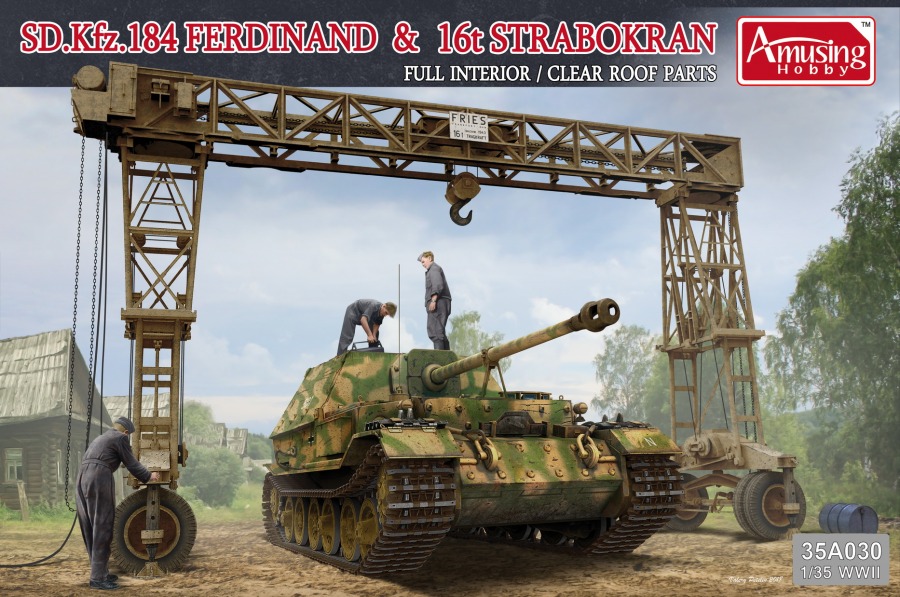
1/35 Sd.Kfz.184 Ferdinand & 16t Strabokran. DESCRIPTION This is an injection-plastic military vehicle model kit. From Amusing Hobby comes a 2-in-1 kit of the Ferdinand Jagdpanzer Sd.Kfz. 184 and 16t Strabokran! The characteristic feature of the Ferdinand was that it was generated by two gasoline engines and driven by an electric motor. By using a motor as the driving unit, no transmission was required. In the past, this vehicle was said to have a lot of breakdowns for this reason, but some recent documents have reported that there were fewer breakdowns than some vehicles equipped with transmissions. On the Eastern Front, the Ferdinand's appearance had a great impact. Strabokrans are gate-type mobile cranes used by German field maintenance teams during tank maintenance and repairs. About 100 units were manufactured and used in German armored divisions and heavy tank battalions. Kit features: The Ferdinand's interior layout can be enjoyed even after completion thanks to the included transparent parts. The kit recreates the precise details of the Strabokran, and it can assembled in its working state. [Mold Color]: Tan, brown [Includes]: Clear parts, photo-etched parts Release Date:Sep 2019 Item Size/Weight:39.8cm x 26.3cm x 19.5cm / 1680g
1/35 Sd.Kfz.184 Ferdinand & 16t Strabokran. DESCRIPTION This is an injection-plastic military vehicle model kit. From Amusing Hobby comes a 2-in-1 kit of the Ferdinand Jagdpanzer Sd.Kfz. 184 and 16t Strabokran! The characteristic feature of the Ferdinand was that it was generated by two gasoline engines and driven by an electric motor. By using a motor as the driving unit, no transmission was required. In the past, this vehicle was said to have a lot of breakdowns for this reason, but some recent documents have reported that there were fewer breakdowns than some vehicles equipped with transmissions. On the Eastern Front, the Ferdinand's appearance had a great impact. Strabokrans are gate-type mobile cranes used by German field maintenance teams during tank maintenance and repairs. About 100 units were manufactured and used in German armored divisions and heavy tank battalions. Kit features: The Ferdinand's interior layout can be enjoyed even after completion thanks to the included transparent parts. The kit recreates the precise details of the Strabokran, and it can assembled in its working state. [Mold Color]: Tan, brown [Includes]: Clear parts, photo-etched parts Release Date:Sep 2019 Item Size/Weight:39.8cm x 26.3cm x 19.5cm / 1680g
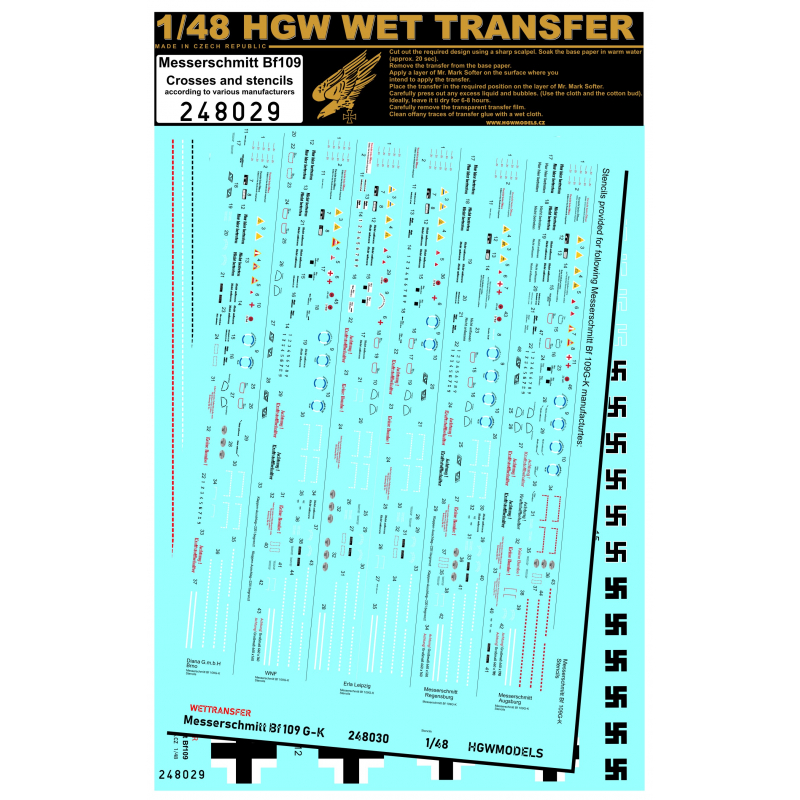
1/48 Messerschmitt Bf109 Crosses + Stencils - Wet Transfers - various manufacturers. Crosses and stencils for Messerschmitt Bf109 in 1/48 scale. Wet transfer technology means that decal doesn't leave any signs of varnish or typical film after its application, so only text or symbols stay attached to the surface. The biggest issue relating to using ordinary decals is the varnish which creates a glossy film around the decal. It is quite hard to work with classic decals the way to make this film invisible and it is impossible to reach a good result in case of metallic surfaces. OK, there are dry transfers on the market but work with them is also quite uncomfortable, it is hard to place them correctly and a modeler has the one chance only. HGW's wet transfers are similar to ordinary decals. It is possible to move them during the attaching process and find the best position. Then just push the water from below the transfer, let it dry few hours, remove the transfer foil and work is done. Only text or symbol stays attached to the surface. Instructions: 1. Cut the required part.2. Soak in hot water and wait till the decal loose its base-paper.3. Apply as regular decal.4. Push the water from below the decal.5. Let it dry for 2-3 hours.6. Remove the transfer foil and clean the glue stains with water.
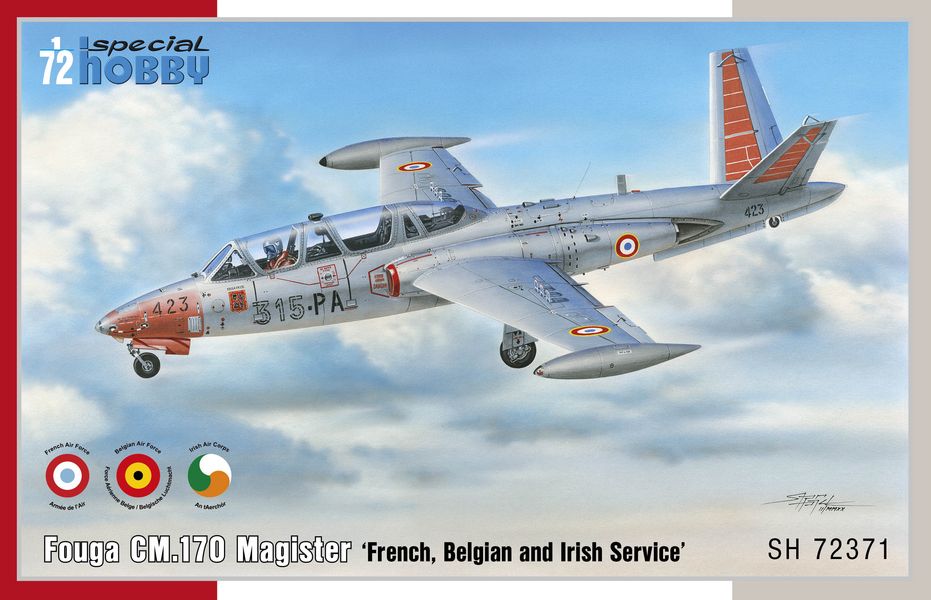
Plastikový model letadla 1/72 Fouga CM.170 Magister ‘French, Belgian and Irish Service’. The Fouga Magister was a French jet trainer aircraft which was used by a large number of oprators, not only in Europe. This boxing brings decal schemes for French, Belgian and Irish options.four grey styrene sprues and one clear canopy sprue. four marking options, two as flown in France (one of which sports an anniversary scheme), one operated in Belgium and one in the Republic of Ireland nicely detailed model resin detail sets also available for any Fouga boxing: Seats Q72227, Wheels Q72228, Pilots and a Mechanic F72306 for Israeli boxing, we have also designed armament sets: Unguided Rockets Q72348, Bombs Q72349 and Rocket launchers Q72306.
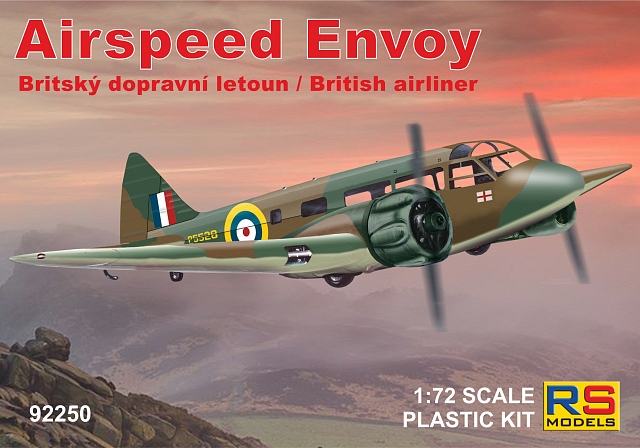
Plastikový model letadla 1/72 Airspeed Envoy 4 decal v. for Spain, Nanking, RAF. Pilot and eight-passenger enlarged and twin-engined development of the AS.5 Courier. First flown on 26 June 1934. About 50 built by Airspeed for British, Japanese, Czechoslovakian, Chinese and South African civil operators, plus a small number for the South African Air Force and the RAF (SAAF Envoys carrying bombs and one forward-firing and one dorsal-turreted machine-gun). Mitsubishi also built a number under licence. Engines fitted to Envoys included the Wolseley AR.9, Scorpio I or Aries III, Armstrong Siddeley Lynx IVC or Cheetah IX, Wright Whirlwind R.760 and Walter Castor II. 4 decal variants1. AS.6J, RAF, 19402. AS.6J, Spanish Nationalist, 19363. AS.6J, Spanish Republicans, 19364. AS.6J, Kwangsi Air Force, 1937
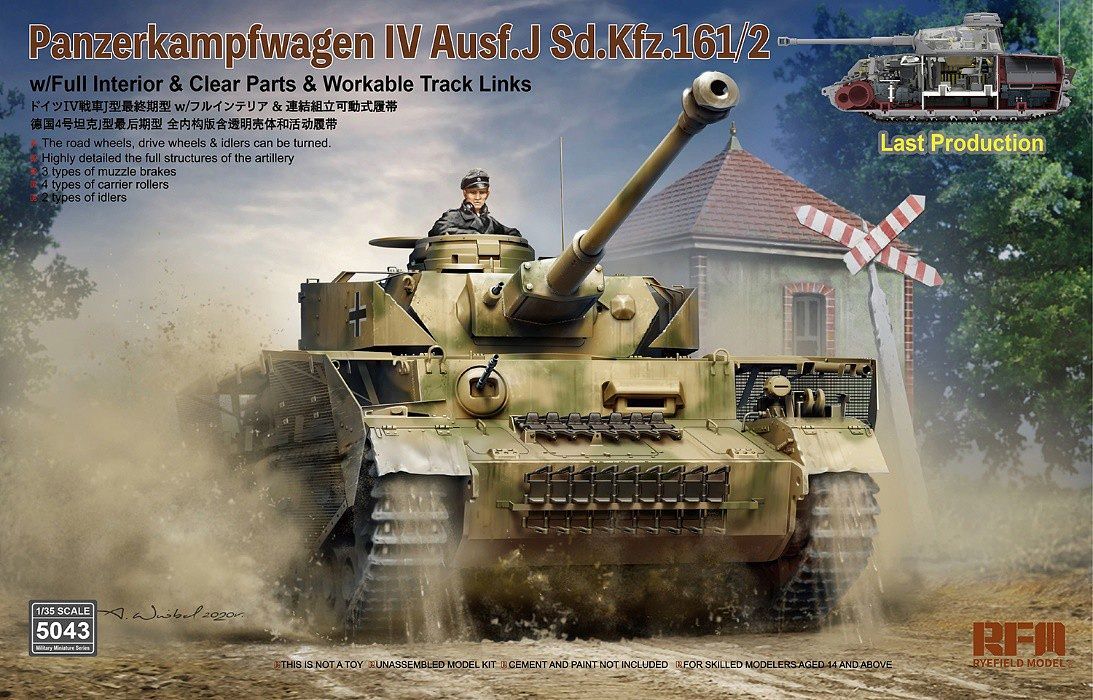
1/35 Panzer IV Ausf.J last production - full interior. The No, IV Type J tank was the final version of the No. IV tank series, and was simplified from previous versions to improve productivity. The biggest change from the H-type is the removal of the turret rotation motor and auxiliary engine for power generation; this allowed the turret to be turned manually. By removing these items and adding a fuel tank, the tank's cruising range was increased from 210km to 320km on level ground. This kit from Rye Field Model has a newly molded full interior! It also has clear parts for the turret and upper hull, in addition to the normal parts. The tracks are of the linkable assembly type, and the suspension is movable; it comes with three types of muzzle brakes, two types of guide wheels and four types of upper wheels. Photo-etched parts and decals for three versions are also included. [Includes]: Photo-etched parts, decals for 3 versions
1/48 Messerschmitt Bf109 Crosses + Stencils - Wet Transfers - various manufacturers. Crosses and stencils for Messerschmitt Bf109 in 1/48 scale. Wet transfer technology means that decal doesn't leave any signs of varnish or typical film after its application, so only text or symbols stay attached to the surface. The biggest issue relating to using ordinary decals is the varnish which creates a glossy film around the decal. It is quite hard to work with classic decals the way to make this film invisible and it is impossible to reach a good result in case of metallic surfaces. OK, there are dry transfers on the market but work with them is also quite uncomfortable, it is hard to place them correctly and a modeler has the one chance only. HGW's wet transfers are similar to ordinary decals. It is possible to move them during the attaching process and find the best position. Then just push the water from below the transfer, let it dry few hours, remove the transfer foil and work is done. Only text or symbol stays attached to the surface. Instructions: 1. Cut the required part.2. Soak in hot water and wait till the decal loose its base-paper.3. Apply as regular decal.4. Push the water from below the decal.5. Let it dry for 2-3 hours.6. Remove the transfer foil and clean the glue stains with water.
Plastikový model letadla 1/72 Fouga CM.170 Magister ‘French, Belgian and Irish Service’. The Fouga Magister was a French jet trainer aircraft which was used by a large number of oprators, not only in Europe. This boxing brings decal schemes for French, Belgian and Irish options.four grey styrene sprues and one clear canopy sprue. four marking options, two as flown in France (one of which sports an anniversary scheme), one operated in Belgium and one in the Republic of Ireland nicely detailed model resin detail sets also available for any Fouga boxing: Seats Q72227, Wheels Q72228, Pilots and a Mechanic F72306 for Israeli boxing, we have also designed armament sets: Unguided Rockets Q72348, Bombs Q72349 and Rocket launchers Q72306.
Plastikový model letadla 1/72 Airspeed Envoy 4 decal v. for Spain, Nanking, RAF. Pilot and eight-passenger enlarged and twin-engined development of the AS.5 Courier. First flown on 26 June 1934. About 50 built by Airspeed for British, Japanese, Czechoslovakian, Chinese and South African civil operators, plus a small number for the South African Air Force and the RAF (SAAF Envoys carrying bombs and one forward-firing and one dorsal-turreted machine-gun). Mitsubishi also built a number under licence. Engines fitted to Envoys included the Wolseley AR.9, Scorpio I or Aries III, Armstrong Siddeley Lynx IVC or Cheetah IX, Wright Whirlwind R.760 and Walter Castor II. 4 decal variants1. AS.6J, RAF, 19402. AS.6J, Spanish Nationalist, 19363. AS.6J, Spanish Republicans, 19364. AS.6J, Kwangsi Air Force, 1937
1/35 Panzer IV Ausf.J last production - full interior. The No, IV Type J tank was the final version of the No. IV tank series, and was simplified from previous versions to improve productivity. The biggest change from the H-type is the removal of the turret rotation motor and auxiliary engine for power generation; this allowed the turret to be turned manually. By removing these items and adding a fuel tank, the tank's cruising range was increased from 210km to 320km on level ground. This kit from Rye Field Model has a newly molded full interior! It also has clear parts for the turret and upper hull, in addition to the normal parts. The tracks are of the linkable assembly type, and the suspension is movable; it comes with three types of muzzle brakes, two types of guide wheels and four types of upper wheels. Photo-etched parts and decals for three versions are also included. [Includes]: Photo-etched parts, decals for 3 versions

Plastikový model letadla 1/32 T-33 'Japan and South American T-Birds'. Model of one of the most famous trainer aeroplane ever built in the US, no else jet trainer has been produced in larger numbers than the T-33. With the exception of Antarctica and Australia, the T-bird was operated world-wide. The kit offers – six styrene sprues, one sprue with clear parts, full colour instruction manual, pre-painted photo etches, resin cast details and a sheet of decals. Nicely detailed model Etches and resin set already in the box Famous machine wearing unique colour schemes Decals offer a sharkmouthed machine flown in Guatemala, a Peruvian T-33 and one as operated by the JASDF. Country of origin: USA / Modern
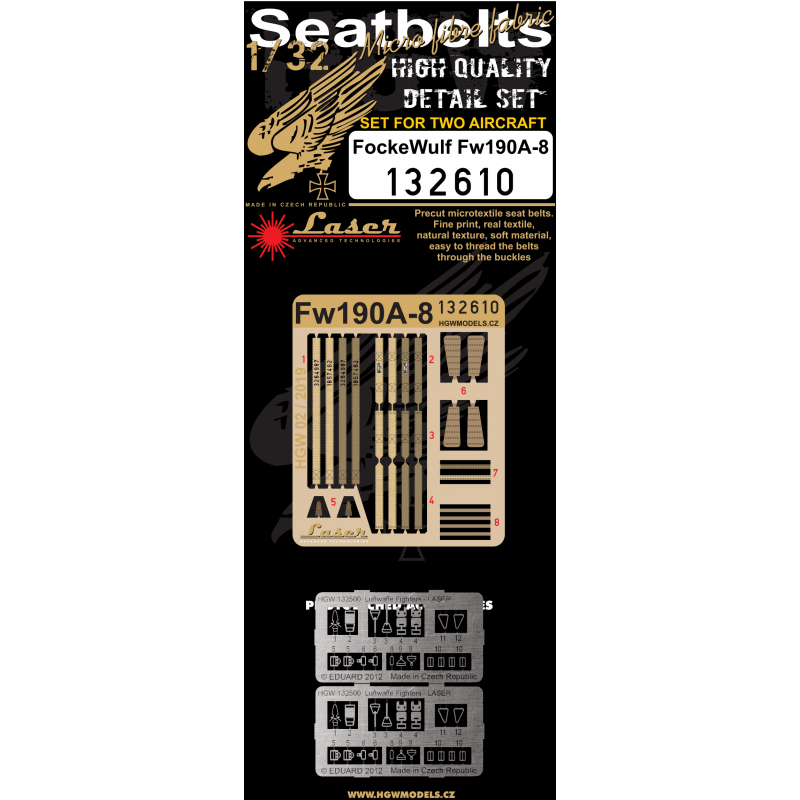
1/32 Focke Wulf Fw 190A-8 - Fabric Seat Belts - pre-cut (laser). The set contains complete belts for two aircrafts. Accessory designed for your plastic model Fw190A-8. Seat belts from HGW Models are laser-cut so it is easy-to-use product. Set contains micro fabric belts and photo etched buckles suitable for large scale planes in 1/32 scale. ACCESSORY FEATURES contains micro-fabric and photo-etched highly detailed partsbelts are fully functional - modeler can leave them un/fastenedmade from printed micro-fabric material which behaves like a piece of ragtextile parts are prepared for using filters and other agents (they are waterproof and resistant to common nonaggresive modeling preparations INSTRUCTIONS Take the precut textile part out of the sheet.Remove the carrier paper.Bunch the belts up and knead them between the fingers.Thread the belts through the photo etched buckles – use superglue.Put them into the seat.Spray with glossy varnish.Spray with matt varnish.Impregnate the seat belts with very diluted oil colour (mix of black and brown) > texture highlight.
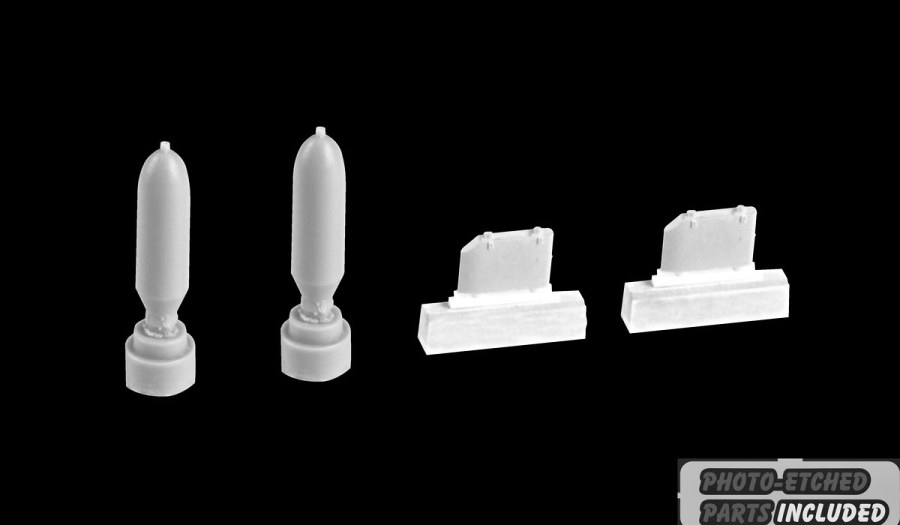
1/72 A-20 Havoc/Wing Racks and Bombs. The A-20 Havoc bombers of the USAAF, and mainly those flown over Europe, were able to carry their bomb load not just internally in the fuselage bomb bays, but under their wings too, using specially designed bomb racks. These racks were uniquely shaped and braced on one side to the wings This set is designed to fit any of the Special Hobby/MPM A-20s, offers the racks as well as the bombs and consists of resin and photo etched parts Operators: USA/WWII, post-WWII
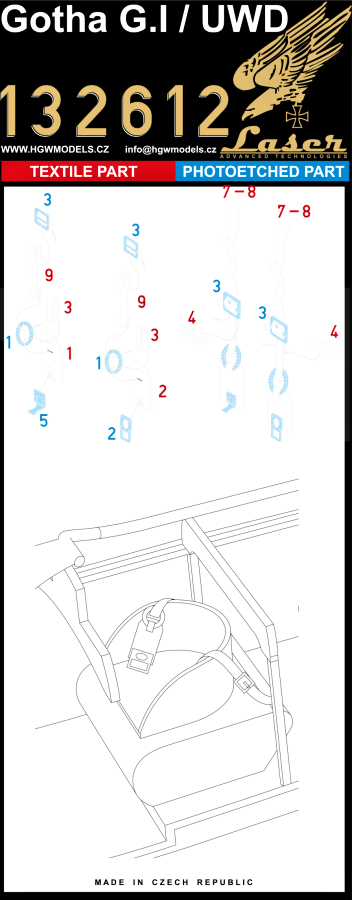
1/32 Gotha G.I / UWD - Fabric Seat Belts - pre-cut (laser) Wingnut Wings. Limited edition exclusive for Art Scale Textile seat belts designed for aircraft Albatros D.V / D.Va by Wingnut Wings. Belts are made from real microfibre and in combination with included photo etched buckles they look highly realistic. This product is available in 1/32 scale. HGW models SEATBELTS in 1:32 scale - this set is designed for Wingnut Wings kits textile sheeting, metallic buckles it is possible to make seat belts fully functional - un/buckle, un/fasten them made by special micro-textile foil set contains seat belts for 2 single-seater aeroplanes textile parts are prepared to using filters - it leads to darkening shades - and these are also waterproofedand resistant to normal nonaggresive modeller preparations photo-etched parts were developed in cooperation with Eduard company INSTRUCTIONS This set contains printed and photoetched parts. Choose appropriate shade of belt and trim on dotted line using very sharp knife. Trim to required length according to the type of seatbelt. Using fingers munch into little ball. Flatten out and thread through photoetched parts. Glue using white glue, do not use chemical glue that eches plastic. When applying, look at photos of cockpit of individual machines. After glued and shaped, paint with matt varnish.
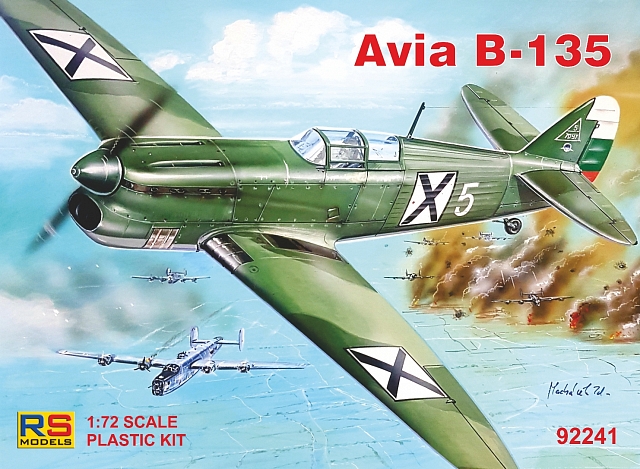
Plastikový model letadla 1/72 Avia B-135 3 decal v. for Luftwaffe, Bulgaria. 3 decal variants1. Avia B-135 - flown on 30th March, 1944 by Jordan Ferdinandov, Bulgaria2. Avia B-135 - FVA Flugtechnische Versuchsanstalt Prag, Letnany 19403. Avia B-135 - Aviation school Dolna Mitropolya, Bulgaria, 1944During the summer of 1939, ing. Novotný and his team initiated considerable re-design and refiment of the B.35, and a new prototype, the B-135, was completed late in the year. The fuselage of the B-135 was essentially similar to that of the B.35.3, the HS 12 Ycrs engine and armament of one 20 mm cannon and two 7,7 mm machine guns were retained, as was the hydraulically-recractable main undercarriage members of the B.35.3 prototype, but a controllable-pitchairscrew was introduced, the rudder was enlarged, and an entirely new wing of all-metal construction was fitted.
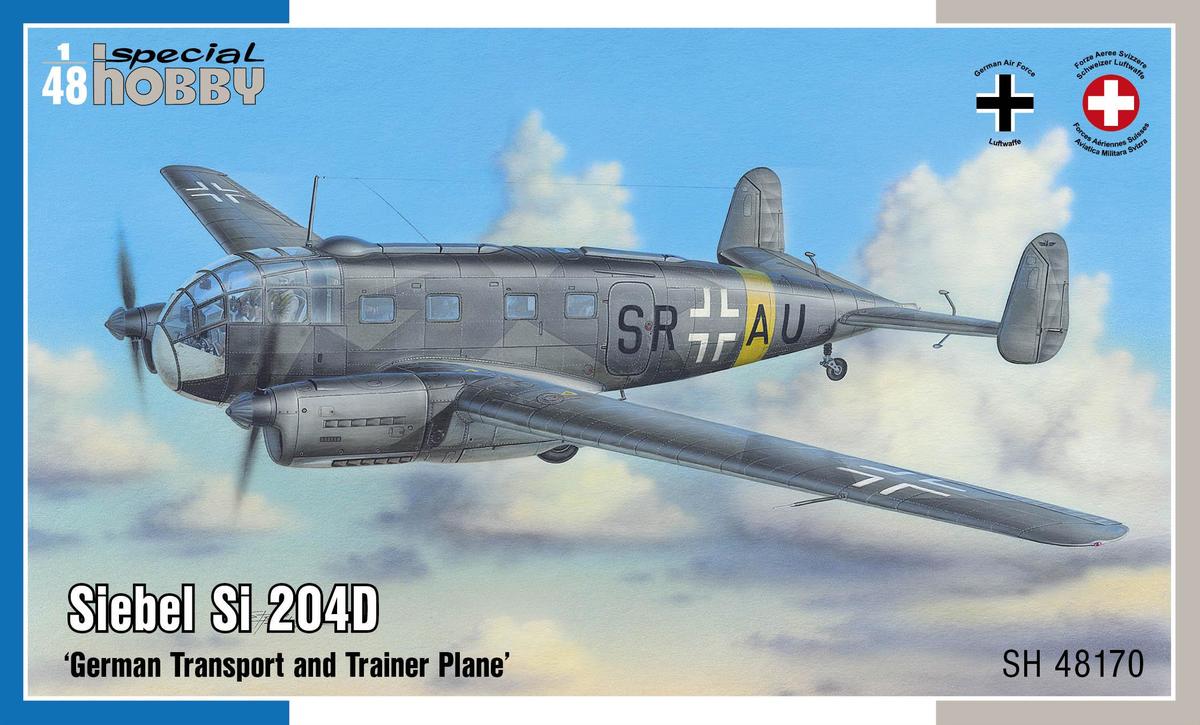
Plastikový model letadla 1/48 Siebel Si 204D 'German Transport and Trainer Plane'. Model of the German twin-engined trainer and transport aircraft portrayed in the Si 204D variety Content of the model kit: eight sprues, one sprue with clear parts, full colour instructions, decal sheet featuring markings for two German and one Swiss machine. Superbly detailed model, dimension and shapewise accurate Finely engraved panel lines Complet pilot office and cargo compartment Large sheet of decals, printed by Italian Cartograf The type has never been kitted before, with the sole exception of a vacuumformed one Country of origin: Germany / WWII
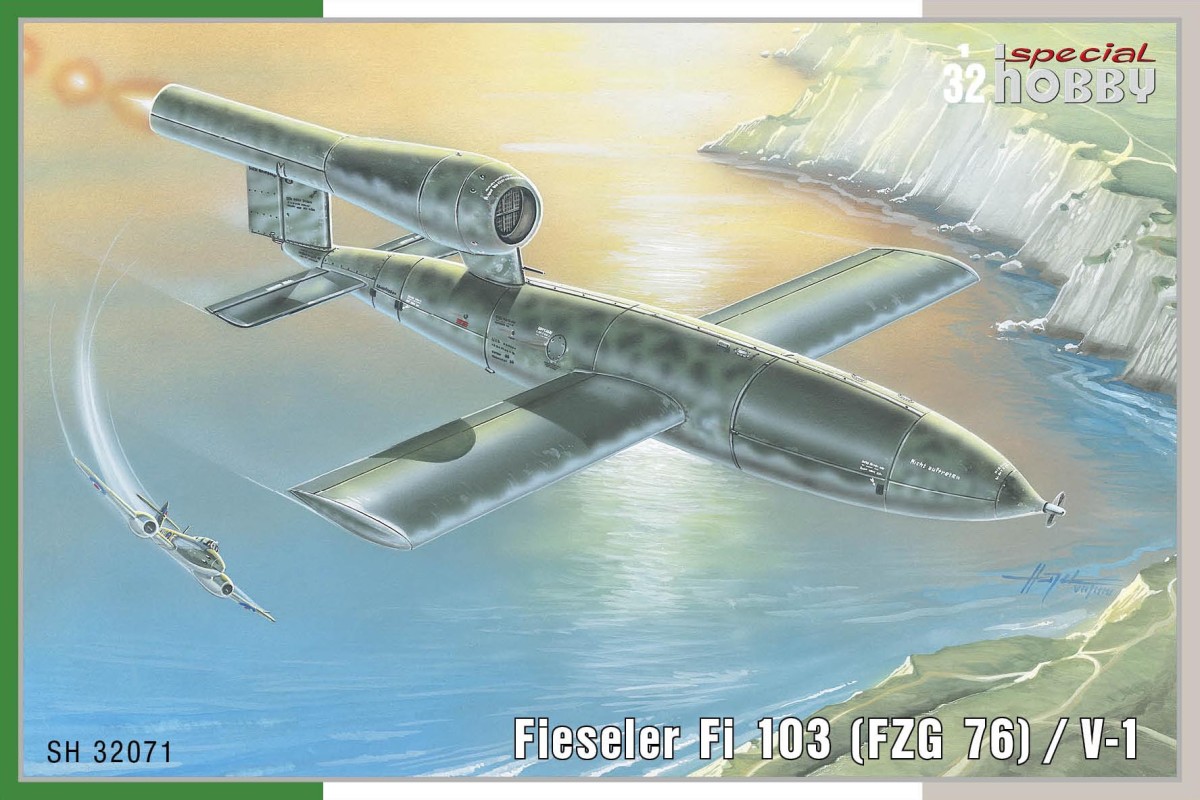
Plastikový model letadla 1/32 Fieseler Fi 103 / V-1. A model of the German unmanned missile, the infamous V-1 flying bomb which was designed and used for terror bombing of London and the UK. When the Allies invaded France, the missiles were also aimed at Antwerp, Liege and Brussels, both from land-based launch sites and aircraft. The kit contains three grey styrene sprues, a decal sheet and full colour instruction leaflet. The decals cater for three machines wearing different styles of camouflage schemes. detailed and extremely accurate model never kitted before in this scale contains not just the missile, but its handling trolley too the camouflage options show different types of colour schemes worn accurate decals with stencils
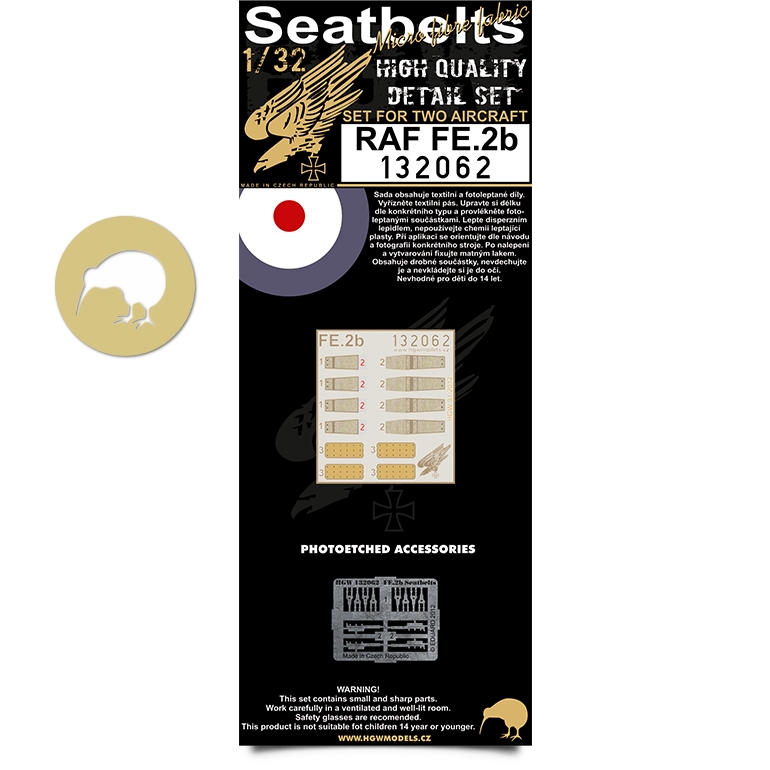
1/32 RAF FE.2b - Fabric Seat Belts - 2 sets Wingnut Wings. Textile seat belts designed for aircraft RAF FE.2b by Wingnut Wings. Belts are made from real microfibre and in combination with included photo etched buckles they look highly realistic. This product is available in 1/32 scale. HGW models SEATBELTS in 1:32 scale - this set is designed for Wingnut Wings kits textile sheeting, metallic buckles it is possible to make seat belts fully functional - un/buckle, un/fasten them made by special micro-textile foil set contains seat belts for 2 single-seater aeroplanes textile parts are prepared to using filters - it leads to darkening shades - and these are also waterproofedand resistant to normal nonaggresive modeller preparations photo-etched parts were developed in cooperation with Eduard company INSTRUCTIONS This set contains printed and photoetched parts. Choose appropriate shade of belt and trim on dotted line using very sharp knife. Trim to required length according to the type of seatbelt. Using fingers munch into little ball. Flatten out and thread through photoetched parts. Glue using white glue, do not use chemical glue that eches plastic. When applying, look at photos of cockpit of individual machines. After glued and shaped, paint with matt varnish.
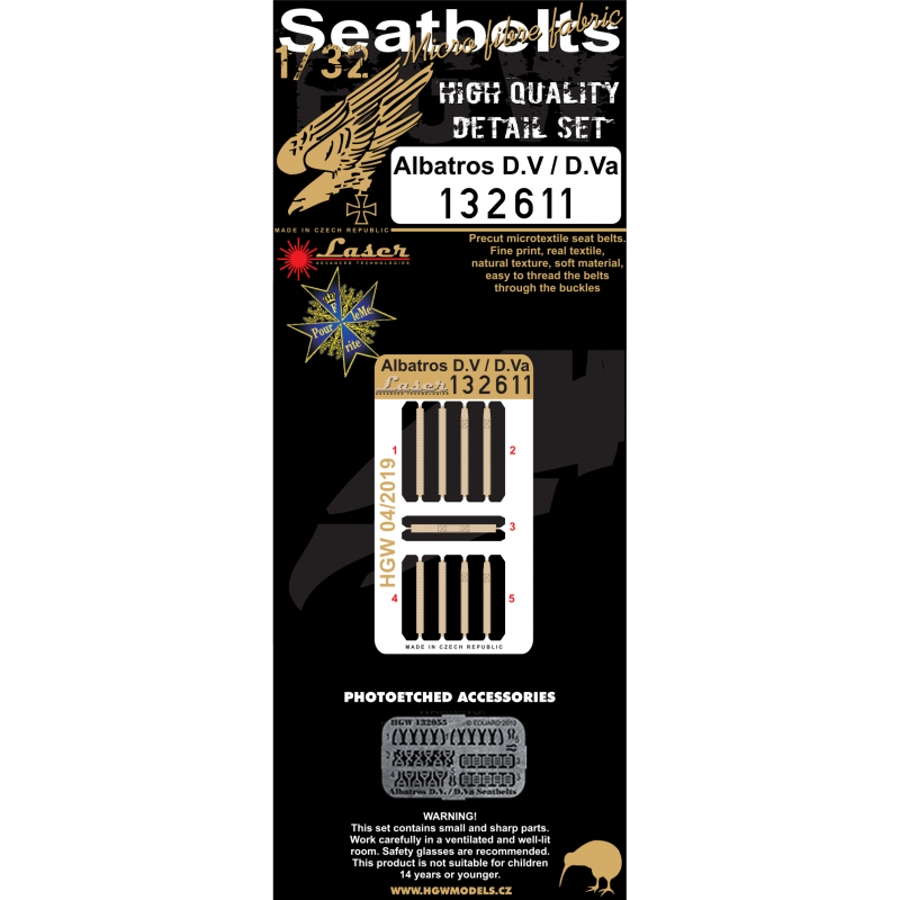
1/32 Albatros D.V / D.Va - Fabric Seat Belts - pre-cut (laser) Wingnut Wings. Textile seat belts designed for aircraft Albatros D.V / D.Va by Wingnut Wings. Belts are made from real microfibre and in combination with included photo etched buckles they look highly realistic. This product is available in 1/32 scale. HGW models SEATBELTS in 1:32 scale - this set is designed for Wingnut Wings kits textile sheeting, metallic buckles it is possible to make seat belts fully functional - un/buckle, un/fasten them made by special micro-textile foil set contains seat belts for 2 single-seater aeroplanes textile parts are prepared to using filters - it leads to darkening shades - and these are also waterproofedand resistant to normal nonaggresive modeller preparations photo-etched parts were developed in cooperation with Eduard company INSTRUCTIONS This set contains printed and photoetched parts. Choose appropriate shade of belt and trim on dotted line using very sharp knife. Trim to required length according to the type of seatbelt. Using fingers munch into little ball. Flatten out and thread through photoetched parts. Glue using white glue, do not use chemical glue that eches plastic. When applying, look at photos of cockpit of individual machines. After glued and shaped, paint with matt varnish.
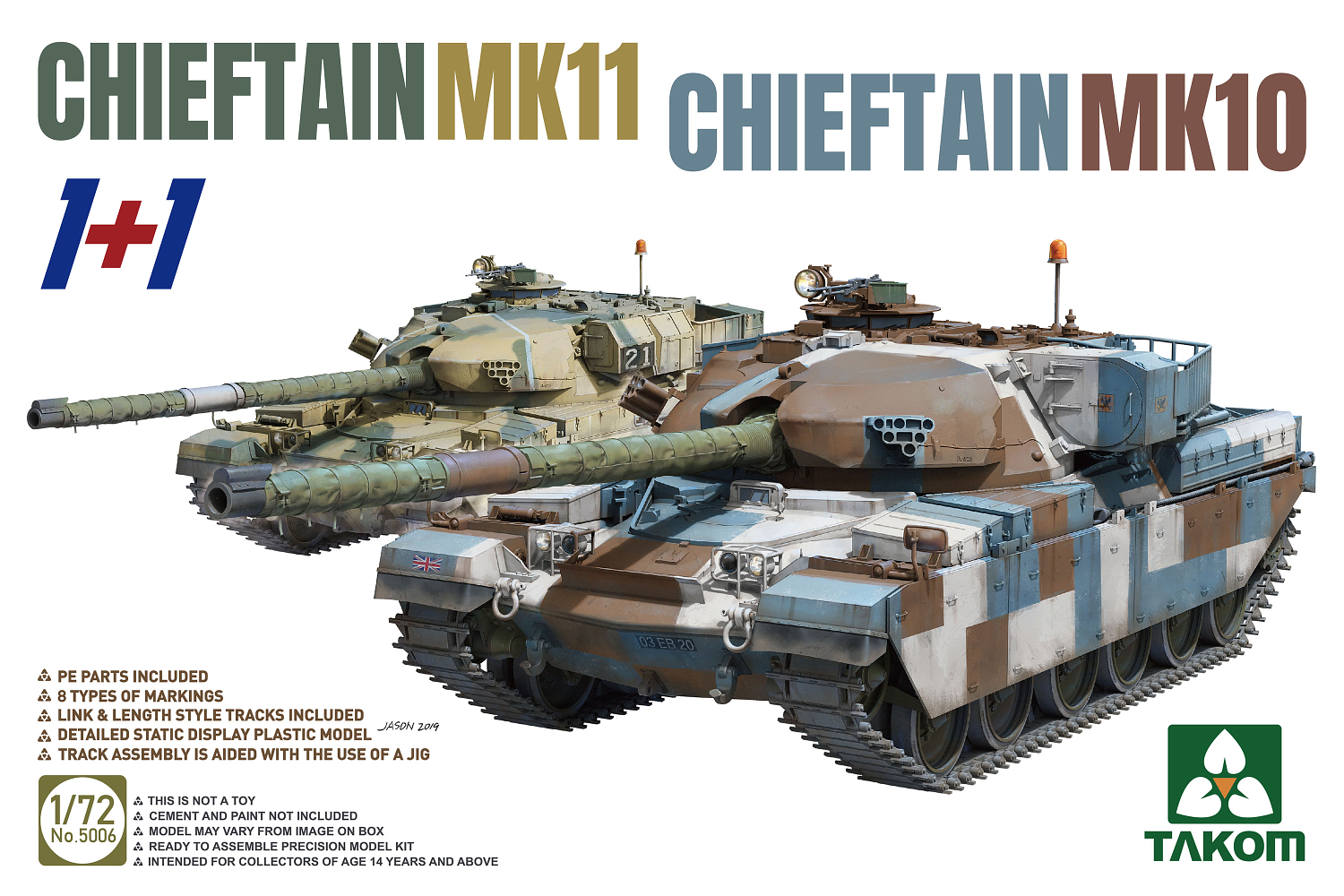
1/72 Chieftain Mk.10 + Mk.11 Combo. This is an injection-plastic military vehicle model kit.The Chieftain is a second-generation main battle tank developed in the United Kingdom after World War II. Development began in the 1950s with the goal of integrating the main tank, the Centurion, and is supporting heavy tank, the Conqueror. Mass production began in May 1963. Because the British Army was skeptical of the idea of improving mobility at the expense of armor defense, the Chieftain adopted heavy armor for occupant protection and the new L11 120mm tank gun as its main armament. The main gun was powerful enough to destroy Soviet-made tanks such as the T-55 and T-62 at a distance of up to 4,000 meters.This new kit from Takom features photo-etched parts and decals for 6 versions; link-and-length tracks and assembly jig are also included. Order yours today![Includes]: Photo-etched parts, decals for 6 versions
Plastikový model letadla 1/32 T-33 'Japan and South American T-Birds'. Model of one of the most famous trainer aeroplane ever built in the US, no else jet trainer has been produced in larger numbers than the T-33. With the exception of Antarctica and Australia, the T-bird was operated world-wide. The kit offers – six styrene sprues, one sprue with clear parts, full colour instruction manual, pre-painted photo etches, resin cast details and a sheet of decals. Nicely detailed model Etches and resin set already in the box Famous machine wearing unique colour schemes Decals offer a sharkmouthed machine flown in Guatemala, a Peruvian T-33 and one as operated by the JASDF. Country of origin: USA / Modern
1/32 Focke Wulf Fw 190A-8 - Fabric Seat Belts - pre-cut (laser). The set contains complete belts for two aircrafts. Accessory designed for your plastic model Fw190A-8. Seat belts from HGW Models are laser-cut so it is easy-to-use product. Set contains micro fabric belts and photo etched buckles suitable for large scale planes in 1/32 scale. ACCESSORY FEATURES contains micro-fabric and photo-etched highly detailed partsbelts are fully functional - modeler can leave them un/fastenedmade from printed micro-fabric material which behaves like a piece of ragtextile parts are prepared for using filters and other agents (they are waterproof and resistant to common nonaggresive modeling preparations INSTRUCTIONS Take the precut textile part out of the sheet.Remove the carrier paper.Bunch the belts up and knead them between the fingers.Thread the belts through the photo etched buckles – use superglue.Put them into the seat.Spray with glossy varnish.Spray with matt varnish.Impregnate the seat belts with very diluted oil colour (mix of black and brown) > texture highlight.
1/72 A-20 Havoc/Wing Racks and Bombs. The A-20 Havoc bombers of the USAAF, and mainly those flown over Europe, were able to carry their bomb load not just internally in the fuselage bomb bays, but under their wings too, using specially designed bomb racks. These racks were uniquely shaped and braced on one side to the wings This set is designed to fit any of the Special Hobby/MPM A-20s, offers the racks as well as the bombs and consists of resin and photo etched parts Operators: USA/WWII, post-WWII
1/32 Gotha G.I / UWD - Fabric Seat Belts - pre-cut (laser) Wingnut Wings. Limited edition exclusive for Art Scale Textile seat belts designed for aircraft Albatros D.V / D.Va by Wingnut Wings. Belts are made from real microfibre and in combination with included photo etched buckles they look highly realistic. This product is available in 1/32 scale. HGW models SEATBELTS in 1:32 scale - this set is designed for Wingnut Wings kits textile sheeting, metallic buckles it is possible to make seat belts fully functional - un/buckle, un/fasten them made by special micro-textile foil set contains seat belts for 2 single-seater aeroplanes textile parts are prepared to using filters - it leads to darkening shades - and these are also waterproofedand resistant to normal nonaggresive modeller preparations photo-etched parts were developed in cooperation with Eduard company INSTRUCTIONS This set contains printed and photoetched parts. Choose appropriate shade of belt and trim on dotted line using very sharp knife. Trim to required length according to the type of seatbelt. Using fingers munch into little ball. Flatten out and thread through photoetched parts. Glue using white glue, do not use chemical glue that eches plastic. When applying, look at photos of cockpit of individual machines. After glued and shaped, paint with matt varnish.
Plastikový model letadla 1/72 Avia B-135 3 decal v. for Luftwaffe, Bulgaria. 3 decal variants1. Avia B-135 - flown on 30th March, 1944 by Jordan Ferdinandov, Bulgaria2. Avia B-135 - FVA Flugtechnische Versuchsanstalt Prag, Letnany 19403. Avia B-135 - Aviation school Dolna Mitropolya, Bulgaria, 1944During the summer of 1939, ing. Novotný and his team initiated considerable re-design and refiment of the B.35, and a new prototype, the B-135, was completed late in the year. The fuselage of the B-135 was essentially similar to that of the B.35.3, the HS 12 Ycrs engine and armament of one 20 mm cannon and two 7,7 mm machine guns were retained, as was the hydraulically-recractable main undercarriage members of the B.35.3 prototype, but a controllable-pitchairscrew was introduced, the rudder was enlarged, and an entirely new wing of all-metal construction was fitted.
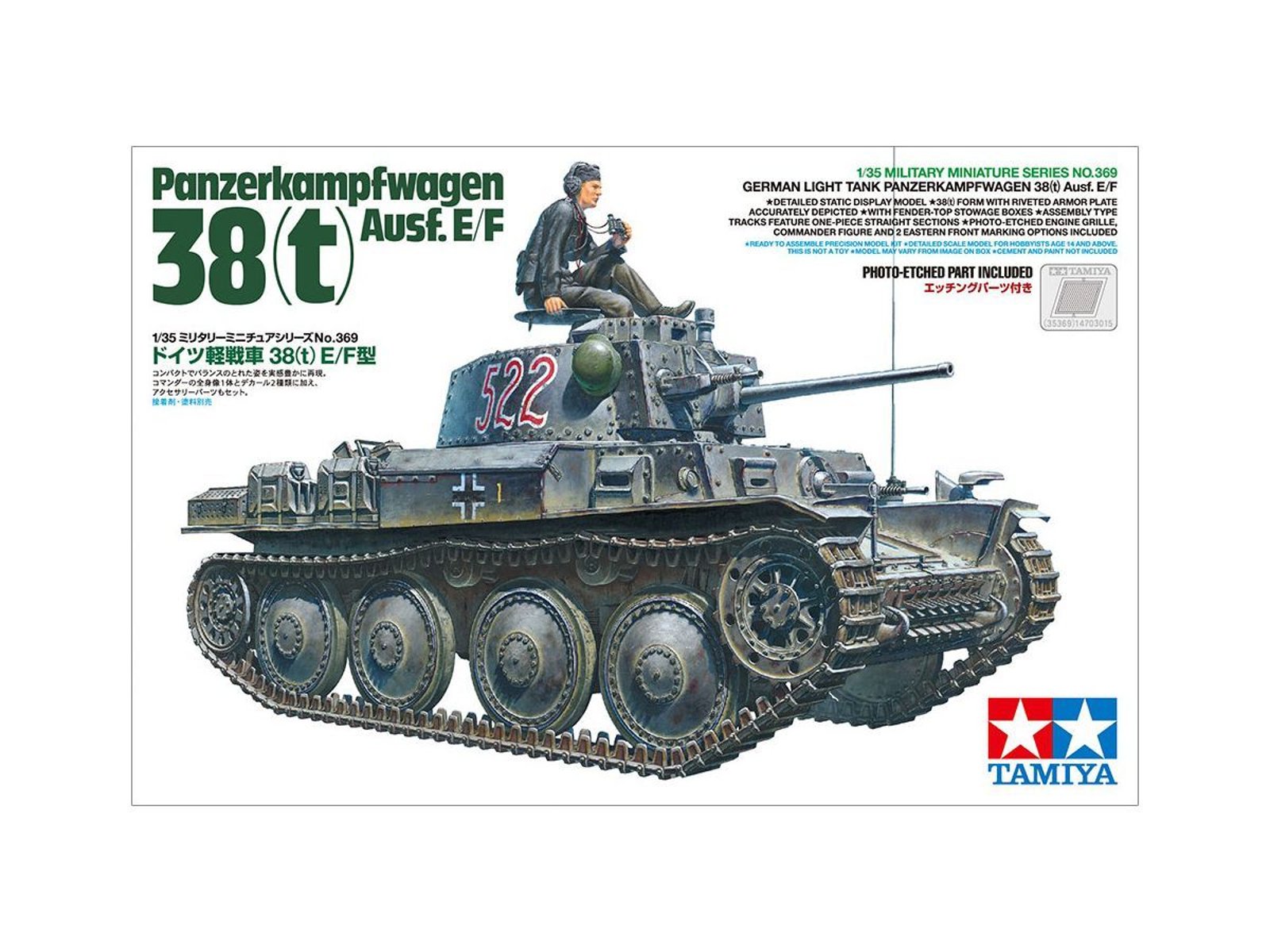
1/35 Panzerkampfwagen 38(t) Ausf.E/F. This is an injection-plastic military vehicle model kit. From Tamiya: After the effective annexation of Czechoslovakia by Nazi Germany in 1939, German forces were interested enough in the native Czech LTvz38 light tank that they took it on and ordered production under their own categorization of 38(t), a light tank with riveted, welded armor and a perky 3.7cm gun. Early production 38(t)s took part in the early German offensives of the war, and the 38(t) underwent continued development with 1,400 produced in total. Ausf.E and F 38(t)s had additional armor across the vehicle for better survivability and were deployed during the early stages of Operation Barbarossa as Nazi Germany once again invaded a neighbor, this time the Soviet Union. About the Model Length: 132mm, width: 62mm The 38(t) form with riveted armor plate is accurately depicted. Parts are included to recreate fender-top stowage boxes that were often added by units on the front line. Assembly type tracks feature single-piece straight sections for fine reproduction of upper run 'sag.' Engine grille mesh is rendered faithfully using a photo-etched component. Comes with a commander figure for installation in the hatch, and two Eastern Front marking options.
Plastikový model letadla 1/48 Siebel Si 204D 'German Transport and Trainer Plane'. Model of the German twin-engined trainer and transport aircraft portrayed in the Si 204D variety Content of the model kit: eight sprues, one sprue with clear parts, full colour instructions, decal sheet featuring markings for two German and one Swiss machine. Superbly detailed model, dimension and shapewise accurate Finely engraved panel lines Complet pilot office and cargo compartment Large sheet of decals, printed by Italian Cartograf The type has never been kitted before, with the sole exception of a vacuumformed one Country of origin: Germany / WWII
Plastikový model letadla 1/32 Fieseler Fi 103 / V-1. A model of the German unmanned missile, the infamous V-1 flying bomb which was designed and used for terror bombing of London and the UK. When the Allies invaded France, the missiles were also aimed at Antwerp, Liege and Brussels, both from land-based launch sites and aircraft. The kit contains three grey styrene sprues, a decal sheet and full colour instruction leaflet. The decals cater for three machines wearing different styles of camouflage schemes. detailed and extremely accurate model never kitted before in this scale contains not just the missile, but its handling trolley too the camouflage options show different types of colour schemes worn accurate decals with stencils
1/32 RAF FE.2b - Fabric Seat Belts - 2 sets Wingnut Wings. Textile seat belts designed for aircraft RAF FE.2b by Wingnut Wings. Belts are made from real microfibre and in combination with included photo etched buckles they look highly realistic. This product is available in 1/32 scale. HGW models SEATBELTS in 1:32 scale - this set is designed for Wingnut Wings kits textile sheeting, metallic buckles it is possible to make seat belts fully functional - un/buckle, un/fasten them made by special micro-textile foil set contains seat belts for 2 single-seater aeroplanes textile parts are prepared to using filters - it leads to darkening shades - and these are also waterproofedand resistant to normal nonaggresive modeller preparations photo-etched parts were developed in cooperation with Eduard company INSTRUCTIONS This set contains printed and photoetched parts. Choose appropriate shade of belt and trim on dotted line using very sharp knife. Trim to required length according to the type of seatbelt. Using fingers munch into little ball. Flatten out and thread through photoetched parts. Glue using white glue, do not use chemical glue that eches plastic. When applying, look at photos of cockpit of individual machines. After glued and shaped, paint with matt varnish.
1/32 Albatros D.V / D.Va - Fabric Seat Belts - pre-cut (laser) Wingnut Wings. Textile seat belts designed for aircraft Albatros D.V / D.Va by Wingnut Wings. Belts are made from real microfibre and in combination with included photo etched buckles they look highly realistic. This product is available in 1/32 scale. HGW models SEATBELTS in 1:32 scale - this set is designed for Wingnut Wings kits textile sheeting, metallic buckles it is possible to make seat belts fully functional - un/buckle, un/fasten them made by special micro-textile foil set contains seat belts for 2 single-seater aeroplanes textile parts are prepared to using filters - it leads to darkening shades - and these are also waterproofedand resistant to normal nonaggresive modeller preparations photo-etched parts were developed in cooperation with Eduard company INSTRUCTIONS This set contains printed and photoetched parts. Choose appropriate shade of belt and trim on dotted line using very sharp knife. Trim to required length according to the type of seatbelt. Using fingers munch into little ball. Flatten out and thread through photoetched parts. Glue using white glue, do not use chemical glue that eches plastic. When applying, look at photos of cockpit of individual machines. After glued and shaped, paint with matt varnish.