Hračky
Celkem 64 produktů

1/72 P-40 - Undercarriage Set (contains wheel well structure and canvas covers). Pro nové modely P-40 verzí E, K, M a N od Special Hobby, ale nejen pro ně je určena sada odlitků hlavních podvozkových šachet. Sada nabízí detailní šachty nezakryté s naznačenou konstrukcí křídla, i v rozšířenější verzi se zakrytými dny a boky plátnem. Sada obsahuje i odlitek plátnem zakryté šachty ostruhového kola. PŘÍSLUŠNOST: USA / WWII
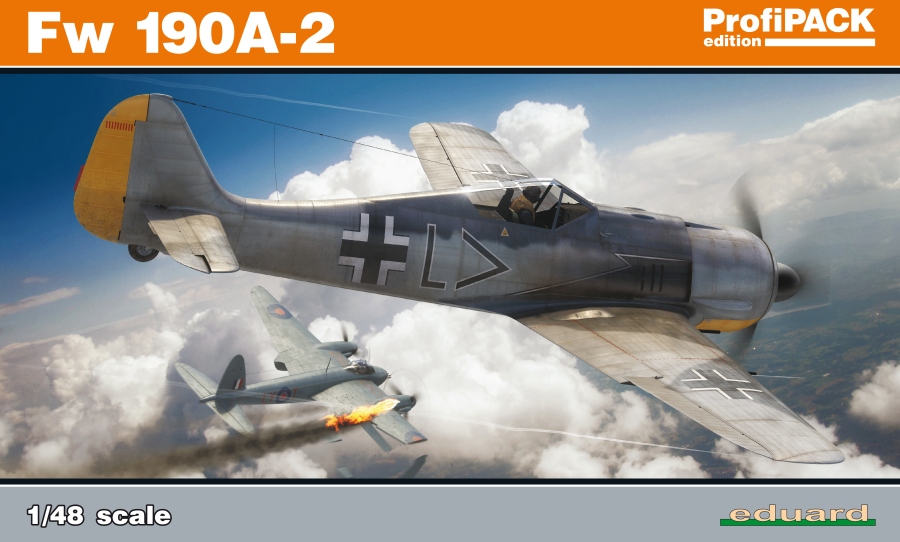
1/48 Fw 190A-2. ProfiPACK edition kit of German WWII fighter aircraft Fw 190A-2 in 1/48 scale.The kit offers the aircraft with two-cannon as well as four-cannon wings.plastic parts: EduardNo. of decal options: 5decals: EduardPE parts: yes, pre-paintedpainting mask: yesresin parts: yes, wheel well doors
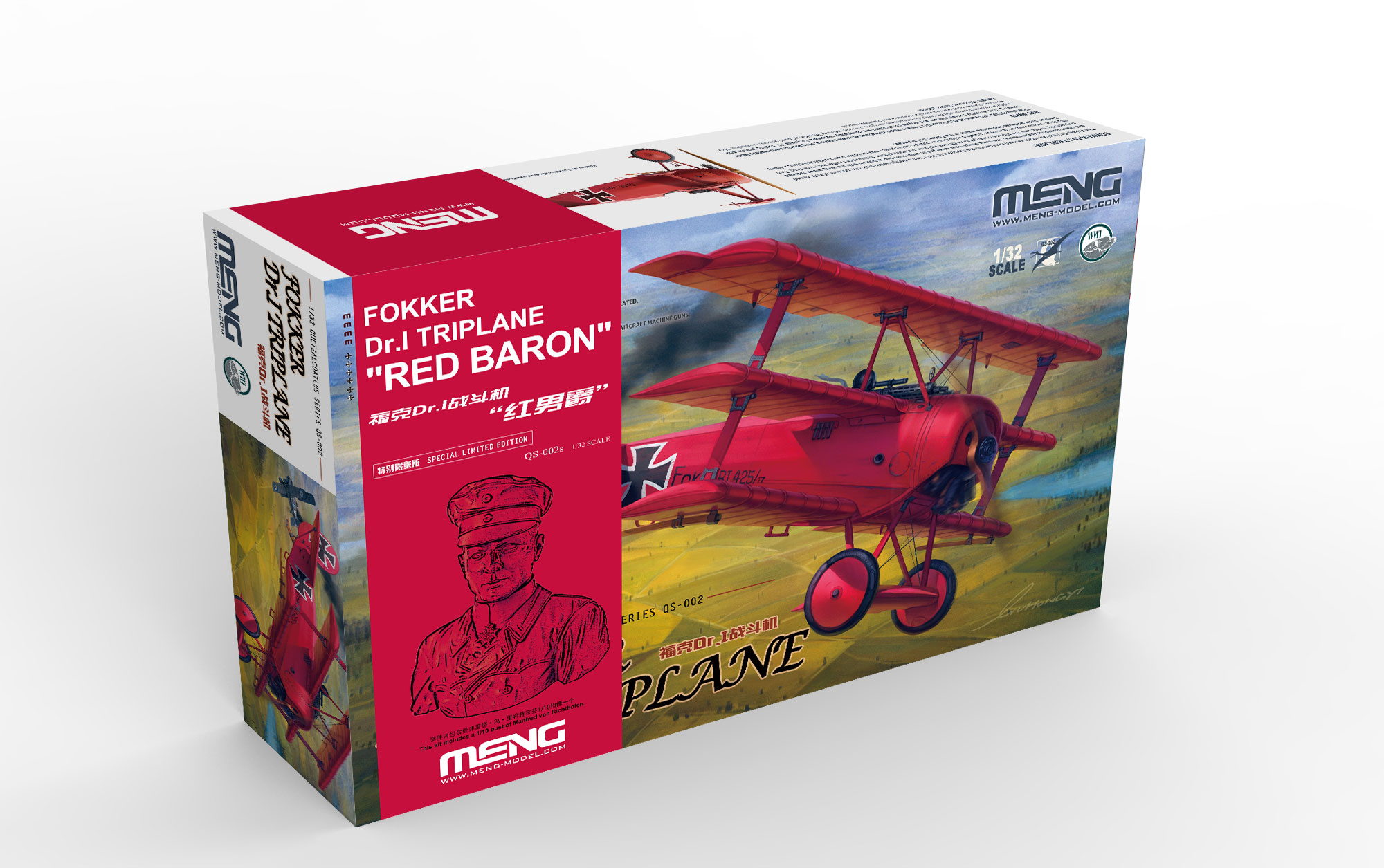
1/32 Fokker Dr.I Triplane "Red Baron" includes a 1/10 resin bust. More than one hundred years ago, Europe was in a state of devastation. Farms and pastures were ruined by shell craters and muddy water. Laughter in bars was replaced by people’s sobbing. Bank managers became soldiers hiding in the trenches and primary school teachers plunged bayonets into others’ chests. Everyone on the battlefield was surrounded by the angriest roars and the most vicious curses. But even in the desperate twilight, there was one gem shining brilliantly. Its brightness was so dazzling that it’s still remembered by the once warring parties. Manfred von Richthofen, the cavalry officer who learn to fly in 1915, became the top-scoring ace of World War I by winning 80 air combat victories in less than two years. His iconic red aircraft was well known to both warring parties. The Germans rejoiced in it, and the Allies were convinced by his exquisite combat skills and precious chivalry. As a legend, his death was dramatic because of the bizarre possibilities. The story of the “Red Baron” has gone across time and beyond hatred and is still being told today. The QS-002s Fokker Dr.I Triplane “Red Baron” is a limited edition product based on the MENG QS-002 Fokker Dr.I Triplane kit. This kit includes a 1/10 resin bust of the “Red Baron” Manfred von Richthofen and a Fokker Dr.I Triplane kit. This Manfred von Richthofen bust features calm and confident facial expressions. The figure wears a leather flight jacket over the Imperial German Army uniform. He wears an M1910 Officer Visor Cap on his head and a Blue Max medal on the neckline. This is the most well-known image of the “Red Baron”. This product is limited to 1,000 kits.
1/72 P-40 - Undercarriage Set (contains wheel well structure and canvas covers). Pro nové modely P-40 verzí E, K, M a N od Special Hobby, ale nejen pro ně je určena sada odlitků hlavních podvozkových šachet. Sada nabízí detailní šachty nezakryté s naznačenou konstrukcí křídla, i v rozšířenější verzi se zakrytými dny a boky plátnem. Sada obsahuje i odlitek plátnem zakryté šachty ostruhového kola. PŘÍSLUŠNOST: USA / WWII
1/48 Fw 190A-2. ProfiPACK edition kit of German WWII fighter aircraft Fw 190A-2 in 1/48 scale.The kit offers the aircraft with two-cannon as well as four-cannon wings.plastic parts: EduardNo. of decal options: 5decals: EduardPE parts: yes, pre-paintedpainting mask: yesresin parts: yes, wheel well doors
1/32 Fokker Dr.I Triplane "Red Baron" includes a 1/10 resin bust. More than one hundred years ago, Europe was in a state of devastation. Farms and pastures were ruined by shell craters and muddy water. Laughter in bars was replaced by people’s sobbing. Bank managers became soldiers hiding in the trenches and primary school teachers plunged bayonets into others’ chests. Everyone on the battlefield was surrounded by the angriest roars and the most vicious curses. But even in the desperate twilight, there was one gem shining brilliantly. Its brightness was so dazzling that it’s still remembered by the once warring parties. Manfred von Richthofen, the cavalry officer who learn to fly in 1915, became the top-scoring ace of World War I by winning 80 air combat victories in less than two years. His iconic red aircraft was well known to both warring parties. The Germans rejoiced in it, and the Allies were convinced by his exquisite combat skills and precious chivalry. As a legend, his death was dramatic because of the bizarre possibilities. The story of the “Red Baron” has gone across time and beyond hatred and is still being told today. The QS-002s Fokker Dr.I Triplane “Red Baron” is a limited edition product based on the MENG QS-002 Fokker Dr.I Triplane kit. This kit includes a 1/10 resin bust of the “Red Baron” Manfred von Richthofen and a Fokker Dr.I Triplane kit. This Manfred von Richthofen bust features calm and confident facial expressions. The figure wears a leather flight jacket over the Imperial German Army uniform. He wears an M1910 Officer Visor Cap on his head and a Blue Max medal on the neckline. This is the most well-known image of the “Red Baron”. This product is limited to 1,000 kits.

Serpent Sports introduce the Spyder 1/10 rear motor Monster Truck in a true Ready to Race version !This big wheel Monster Truck can conquer any terrain with the oversized tyres . Great looks with realistic looking MT body and the large wheels / tyres. The strong and durable power system offers amazing torque and topspeed . The Spyder MT suspension comes from our competion range of vehicles and is made to last ! Superior handling in both on and offroad use. The long bigbore shocks and long durable suspensions arms eats any terrain with eas. DragonRC 2.4 GHz digital transmitter included to manage all the power ! Main features- Ready to race- Prepainted and precut MT body- Dragon-RC 2.4 GHz transmitter TX-RX - Waterproof prorammable electronic speedcontroller 45A Dragon-RC- Brushless, sensorless motor 3000KV 9T Dragon-RC- Durable metal gear servo Dragon-RC- Expert factory assembly and set-up- premounted oversized MT tyres on spoked MT wheels Dragon-RC- Spring steel transmission- Oil-filled gear differential and solid slipper clutch- High performance race geometry- Big bore 12mm RCM type shocks with dual system- Rear motor design- Durable composite chassis design- Large front and rear composite bumper FeaturesChassis and Rear Chassis skid plateComposite chassis plate with a layout allowing for a perfect weight balance, and optimal space for the electronics, battery and servo. The front kick-up angle in the chassis incorporates more clearance for racing and allow for better nose landings. The composite rear skid plate connects to the chassis plate. This connection allows you to unclip the rear end in one piece, but helps reduce the total cost of maintenance. It is also made from extremely high strength composite material. Shocktowers and Shock absorbersDurable composite front and rear shock towers, with multiple shock angle positions allowing to fine tune for varying conditions.Dual system 12mm big bore shocks with coated threaded bodies, a unique cap design, a superbly sealing o-ring and spacer package. Front bumper system The durable composite front bumper system will absorb the worst of head on crashes and will allow for save nose landings. Front wishbones and Front and Rear Track RodsThe long front wishbones are made from a super strong composite material. The arms are angled to optimize the CG and pivot on 3mm captured pins on the inside and out. The arms have 2 mounting positions for shock angle and are prepared to use an optional anti-roll bar if needed. Spring steel front and rear track rods are mounted to durable composite captured ball joints. The track Rods have L/R threading for easy adjustments. Castor blocks Steering Block The steering blocks fit 5x10x4 mm bearings. The caster blocks are very compact and strong units made from a special composite material. Steering system and AckermannThe steering system has a reverse swinging pivot system that optimizes the efficiency through all different types of corners UprightsDurable composite units. The rear hub uprights use a larger 5x14x4 outer bearing and 10x15x4 mm inner for ultimate lasting performance Wheel-axles, wheel hex, trans case, rear arms The spring steel wheel-axles utilized 12mm hex adapter to follow current market standards. The front springs steel axle is fixed, while the rear wheel-hex is a clamping aluminum version.The composite rear transmission case is light and durable. It securely holds the motor plate, differential as well as supports the rear wing mount and rear shock tower. The long and durable angled rear suspension arms are very tough units to withstand the rigors of the track and the hard landings. The rear arm offers 2 options for shock position and two mounting locations for the rear anti-roll bar if needed. Battery space mount and weight balanceThe battery is mounted perfectly in the center line of the car. Its an exact fit for saddle packs. In case of using a Shorty-pack, it can be moved to front or back to play with weight balance. Pieces of hard foam are supplied to do so and secure the battery in position. The carbon fibre battery-top-brace has a secure quick release system with handy alu twist nuts. DifferentialThe oil filled gear-differenial is a super compact, effective and durable unit. ClutchThe car features a solid slipper combined with a steel gear, to have a simple and durable system. The slipper clutch is optional. Motor plate and motor guardThe motor plate comes in anodized aluminum. Rear driveshaft system, wheel-axles The spring steel drive shafts are thin and light, yet durable. The spring steel wheel-axles are 5mm, light and durable, guided by the 2 different size of bearings, inner 10x14x4 mm and outer 5x13x4 mm. The driveshaft pin is fully captured to prevent any failure. These bearings are for sure to stand up the rigors of any track condition. Rear bumperThe rear bumper section is a very durable unit, easy to disassembe, and fits well with the rear of the body, to absorb the worst of back-end crashes. Body shell The light realistic looking MT style body, made in top quality clear polycarbonate, has a nice flowing line, steep front windscreen for down force . Ballbearings and metric FastnersHigh speed sealed stainless steel ballbearings with grease . Hard steel , mostly allen screws, roundhead and countersunk. Minimized number of different allen heads to make working on the car easier. The kit comes complete with body and wheels, full color manual and exploded views, a blank and standard set-up sheet and Serpent decals. Set-up possibilitiesWheelbase, Caster, Ackermann, Axle height Front, Front and rear camber, Front Toe-in and toe-out, Rear Inboard toe-in angle, Rear Outboard toe-in angle, Antisquat, Roll-centers, Ride height, Weight balance, Shocks for dampening and springs, shock angle, Gear ratios, Anti-roll bar thickness, Electronic placement Kit includes - Ready to Race car - Not included: TX batteries, car battery and charger 2.4 GHz transmitter with small receiverWaterproof speed controller and 9T 3000Kv brushless motorMetal gear servo 7kg

1/35 Einheitsanhänger 5t. The Anhänger 5T or 5 tonne trailer, known by the official nomenclature of „Einheitsanhanger 5 t Baumuster E 5“ was the standard medium military trailer of the German military throughout the second world war. With a load capacity of 5 tonnes, and an empty weight of approximately 2.5 tonnes, the Anhänger 5t could be seen hauling material anywhere the German military was active. Also utilized by the Luftwaffe and Kriegsmarine for transportation duties, the Anhanger 5t proved so rugged and useful that it continued to serve other masters well after the end of hostilities Highly detailed static plastic model Fine detailed multi disc wheels with sag Side and rear panels buildable in 2 different options (raised or lowered) Specific decalsheet included Drawbar and front axle fully movable
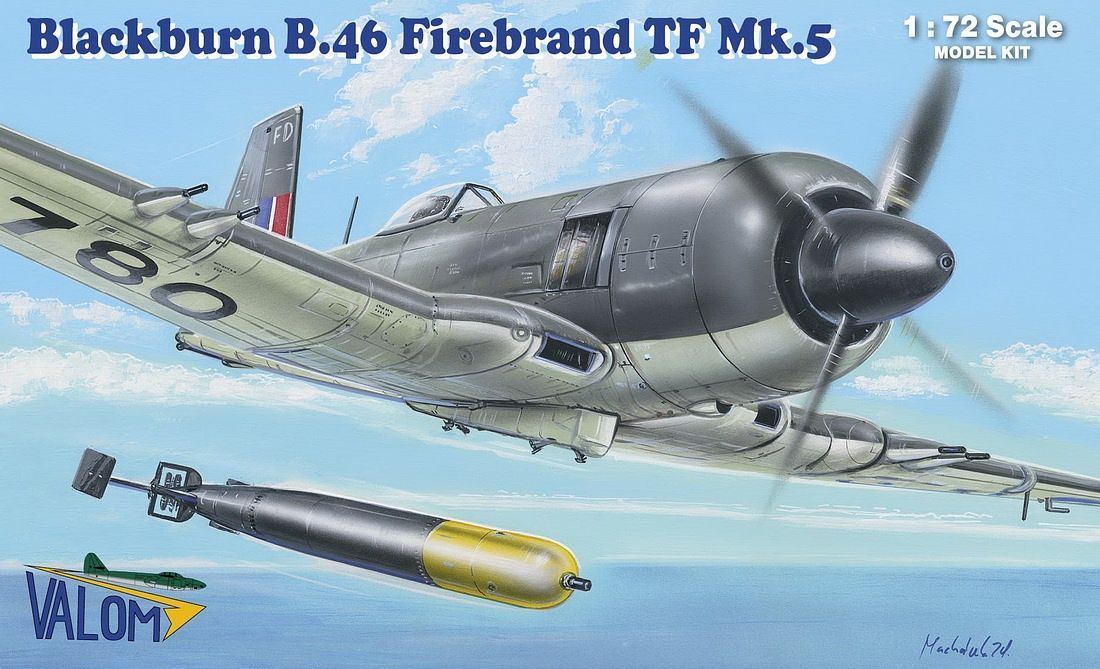
1/72 Blackburn Firebrand TF.Mk.5. This is an injection-plastic aircraft model kit. The Firebrand is a single-seat aircraft developed by Blackburn Aircraft during World War II, used by the Royal Navy Air Corps. Originally developed as a fighter, it was redesigned as a strike fighter, which took six years, and the first aircraft were not delivered until after the end of the war. This kit is a completely new mold, and includes resin parts for the cockpit, wheels, etc., as well as photo-etched parts and two types of Royal Navy decals. Will be approximately 16.5cm long with a wingspan of 21.7cm when completed. [Includes]: Resin parts, photo-etched parts, decals for 2 versions
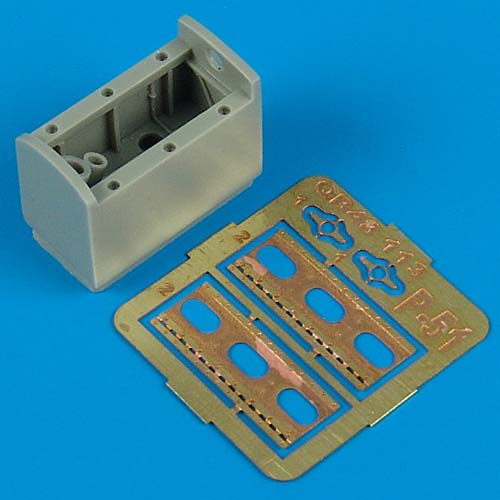
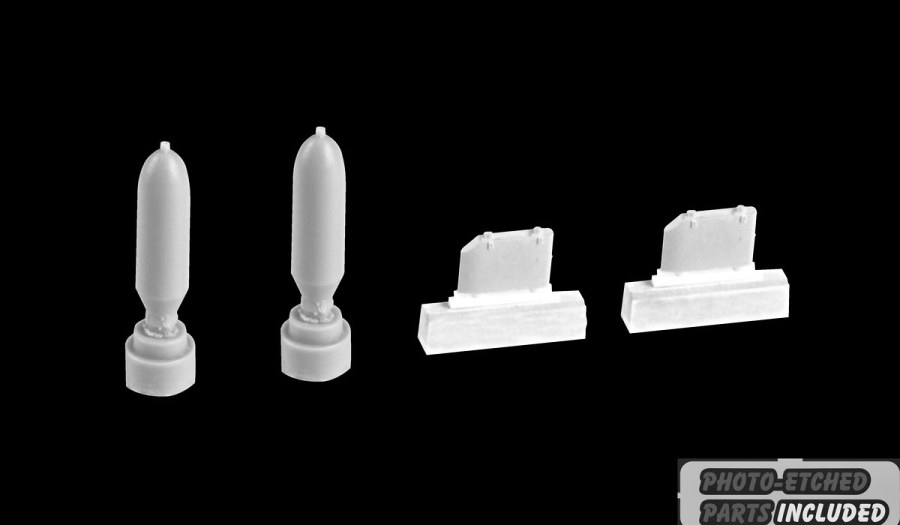
1/72 A-20 Havoc/Wing Racks and Bombs. The A-20 Havoc bombers of the USAAF, and mainly those flown over Europe, were able to carry their bomb load not just internally in the fuselage bomb bays, but under their wings too, using specially designed bomb racks. These racks were uniquely shaped and braced on one side to the wings This set is designed to fit any of the Special Hobby/MPM A-20s, offers the racks as well as the bombs and consists of resin and photo etched parts Operators: USA/WWII, post-WWII
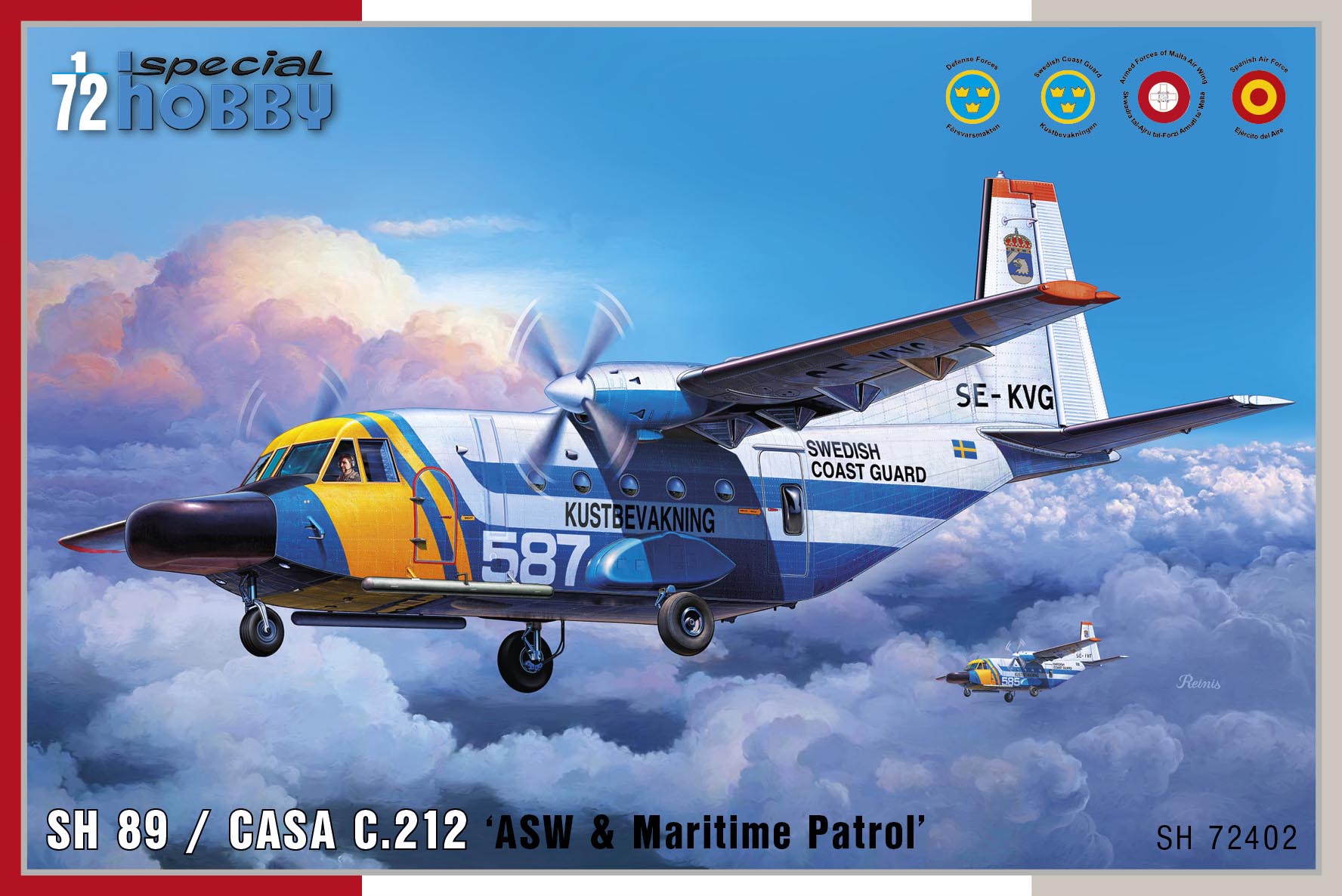
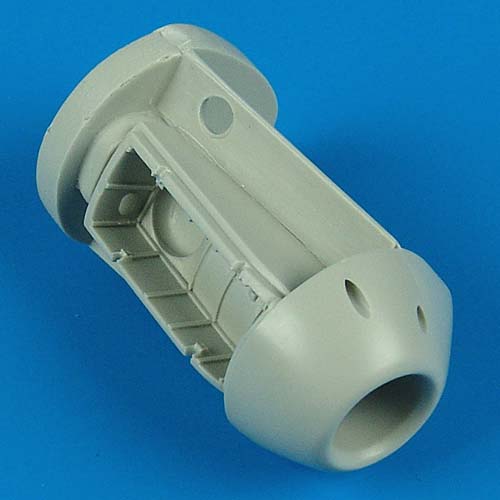
Plastikový model letadla 1/72 SH 89 / CASA C.212 'ASW & Maritime Patrol' . The CASA C.212 is a Spanish turboprop-powered STOL cargo aircraft that has seen service with a wide range of countries and flew in many different roles, one of them being maritime surveillance and patrol. Machines fitted for this sort of tasks carry radar antennae in distinctive, duck beak like shaped radomes at the front of the fuselage as well as some more electronics equipment within the airframe. Highly accurate and nicely detailed model Precisely designed sheet of decals offering markings for two Swedish airframes in different colour schemes, one Malta-based machine and a Spanish one. Specific antenna arrays made of resin and photo-etches Double-slotted wing flaps – resin set no.7407 – is recommended for discerning modeller
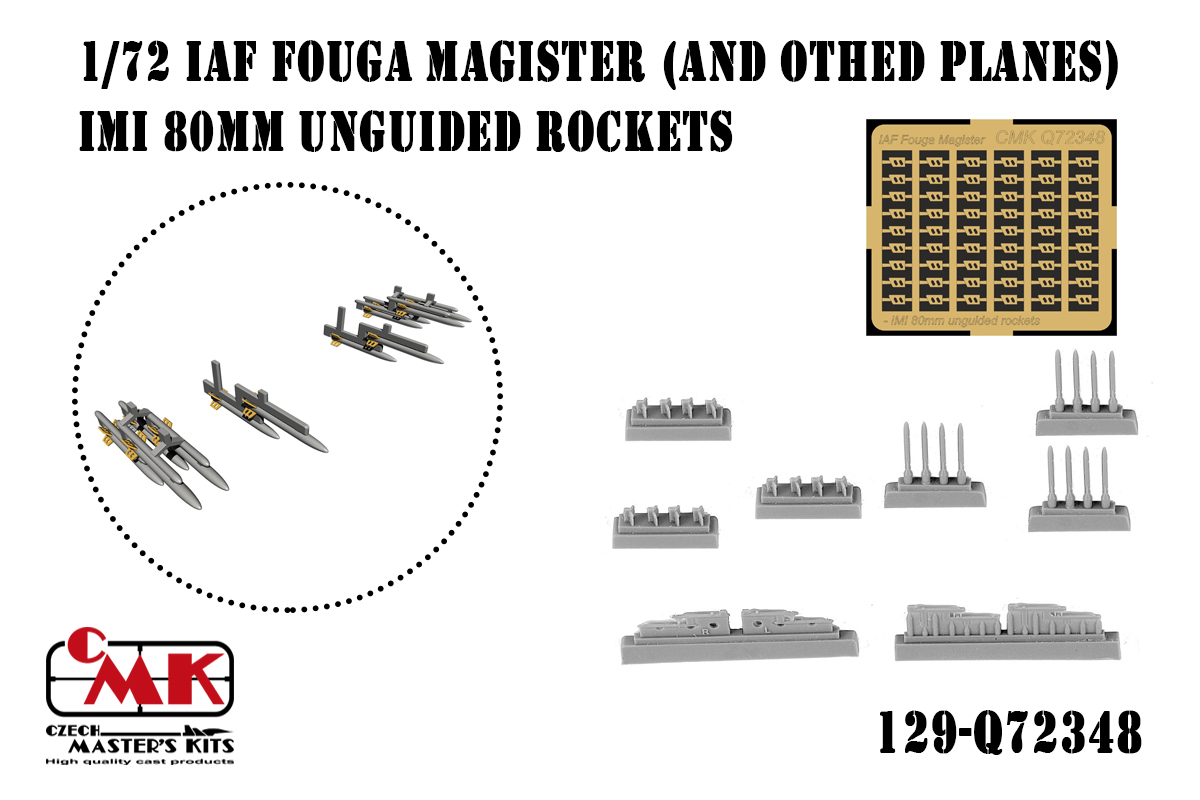
1/72 IAF Fouga Magister (and othed planes) - IMI 80mm unguided rockets. This set contains 80mm rocket missiles with two styles of their underwing racks. The fins come on a photo-etched fret. This ordnance was used on Israeli Magisters/Tsukits as well as on a variety of other aeroplanes such as the Spitfire, P-51 Mustang, AT-6 Texan, Ouragan, Mystere IV..... Country of origin: Israel / modern
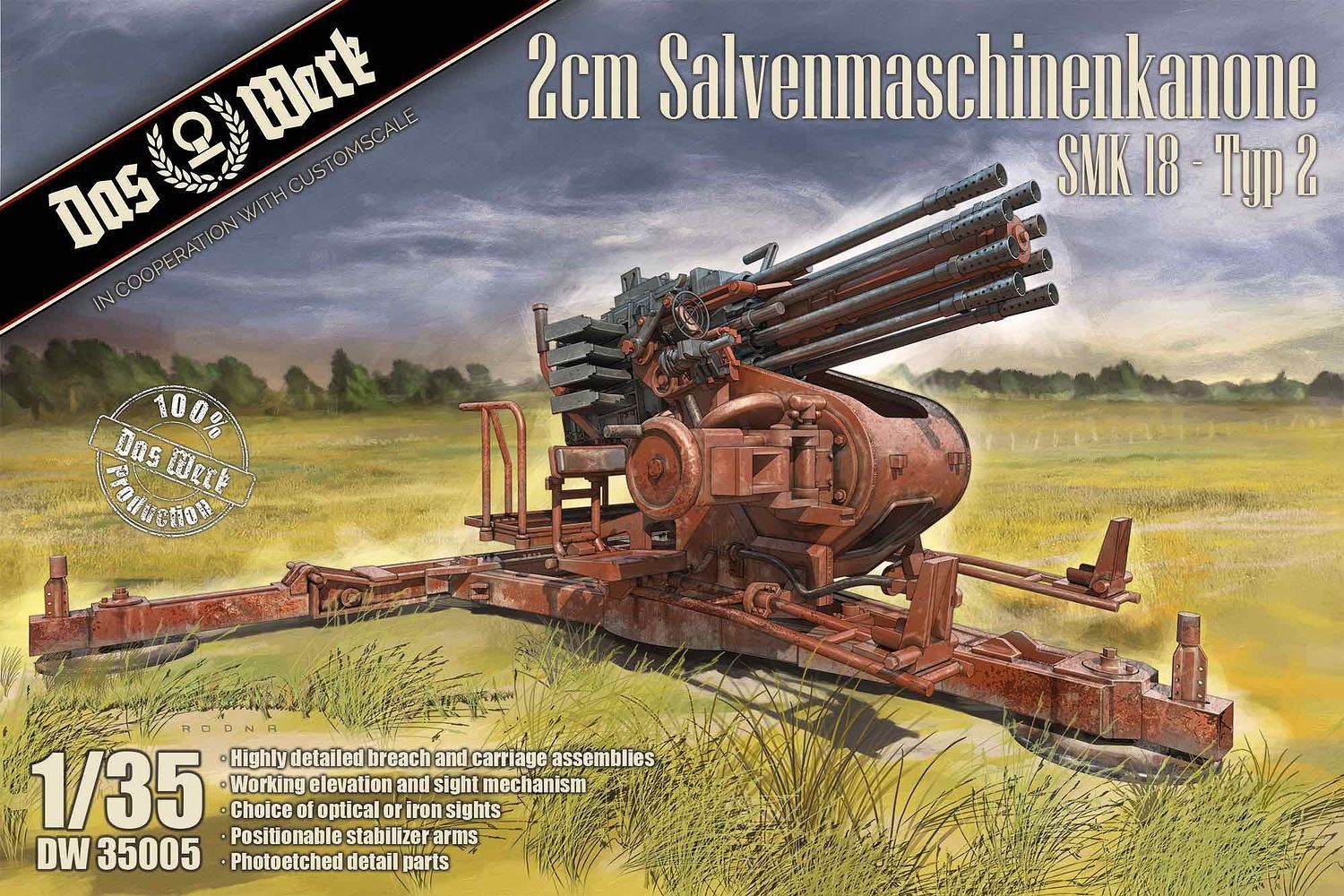
1/35 2CM SALVENMASCHINENKANONE SMK 18 TYPE 2. This is an injection-plastic field gun model kit. The SMK18 Type 2 2-cm cannon is a high-fidelity gun made by Germany during World War II. The idea was to shoot down enemy aircraft by simultaneously firing eight 2-cm cannons. The Type 1 had the cannons in a horizontal arrangement; the prototype of the Type 2 was built in 1939, but it proved to be too unstable for use, as there was too much of a load on its moving parts. This gun is currently on display in a museum in Moscow, Russia. This kit features highly detailed breech and carriage assemblies, working elevation and sight mechanisms, and a choice of optical or iron sights. The stabilizer arms are movable, and a set of photo-etched parts is included as well. Order yours today! [Includes]: Photo-etched parts
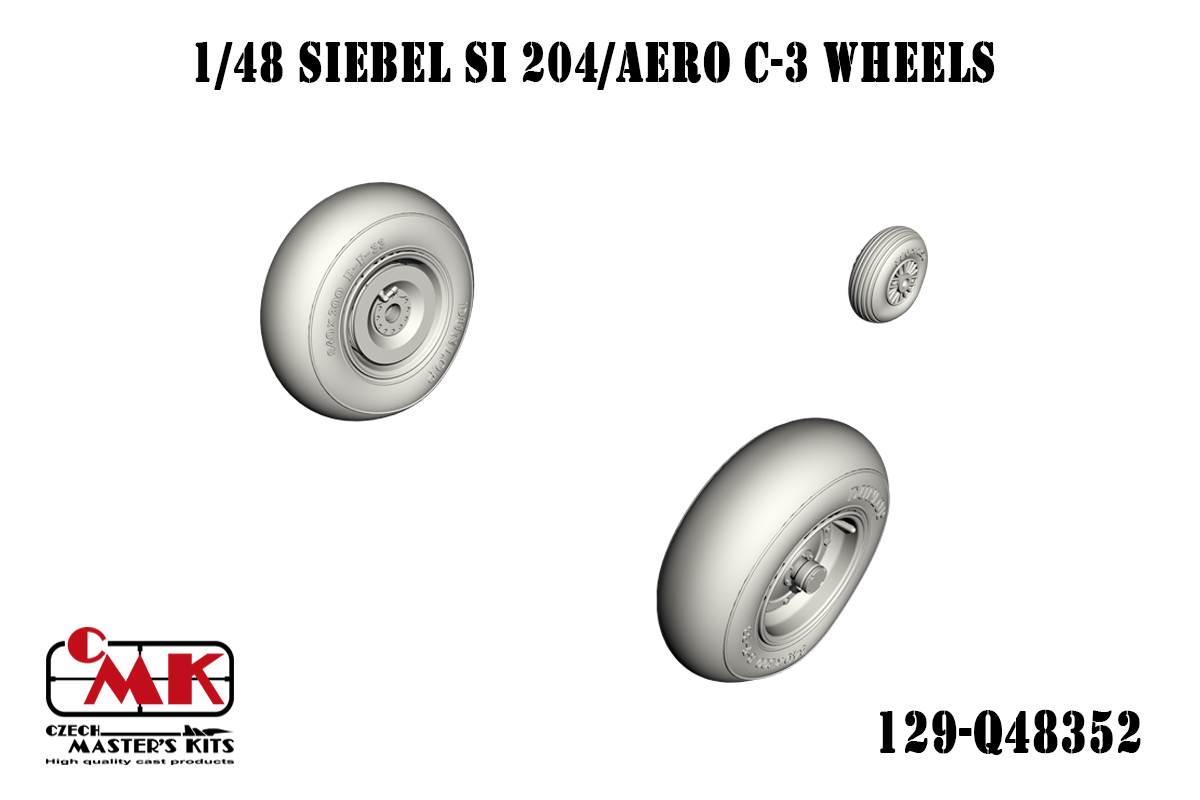
1/48 Siebel Si 204/Aero C-3 Wheels . Main undercarriage wheels and the tailwheel finely cast in resin bring much higher levels of detail to the genuine star of our 2019 range, the 1/48 Siebel Si 204D. Can be used with the upcoming Czech and French versions of the Siebel as well. Country of origin: Germany / WWII
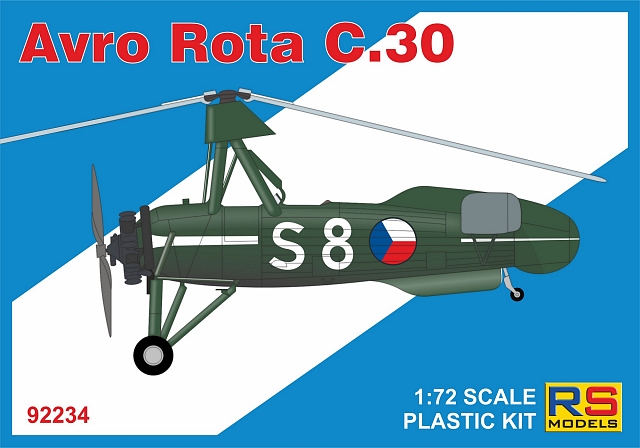
Plastikový model letadla 1/72 Avro Rota C.30A 4 decal v. for Czeczslovak.,RAF, Yugoslavia, Australia. The first production design in the series was the C.30, a radial-engined autogyro with a three-blade, 37 ft (11.3 m) rotor mounted on an aft-leaning tripod, the control column extending into the rear of the two cockpits. The engine was the five-cylinder, 105 hp (78 kW) Armstrong Siddeley Genet Major I used in the C.19 series. The fabric-covered fuselage carried an unbraced tailplane, without elevators but with turned-up tips. The port side of the tailplane had an inverted aerofoil section to counter roll-axis torque produced by the propeller. As with most autogyros, a high vertical tail was precluded by the sagging resting rotor, so the dorsal fin was long and low, extending well aft of the tailplane like a fixed rudder and augmented by a ventral fin. The wide-track undercarriage had a pair of single, wire-braced legs and a small tail wheel was fitted. This model flew in April 1933. It was followed by four improved machines designated C.30P (P here for pre-production) which differed in having a four-legged pyramid rotor mounting and a reinforced undercarriage with three struts per side. The rotor could be folded rearwards for transport. The C.30P used the more powerful (140 hp, 104 kW) seven-cylinder Armstrong Siddeley Genet Major IA radial engine.
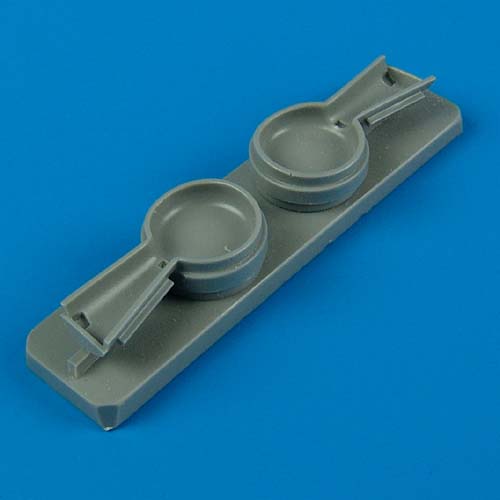
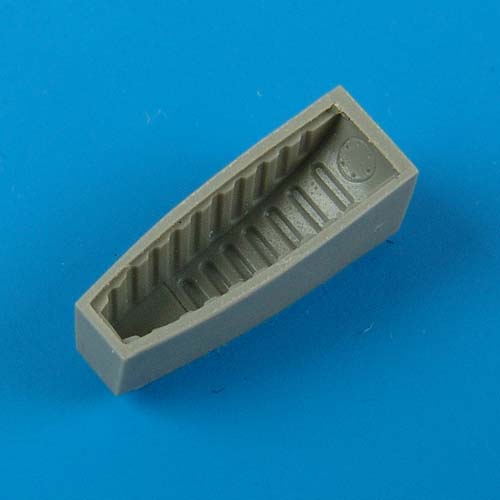
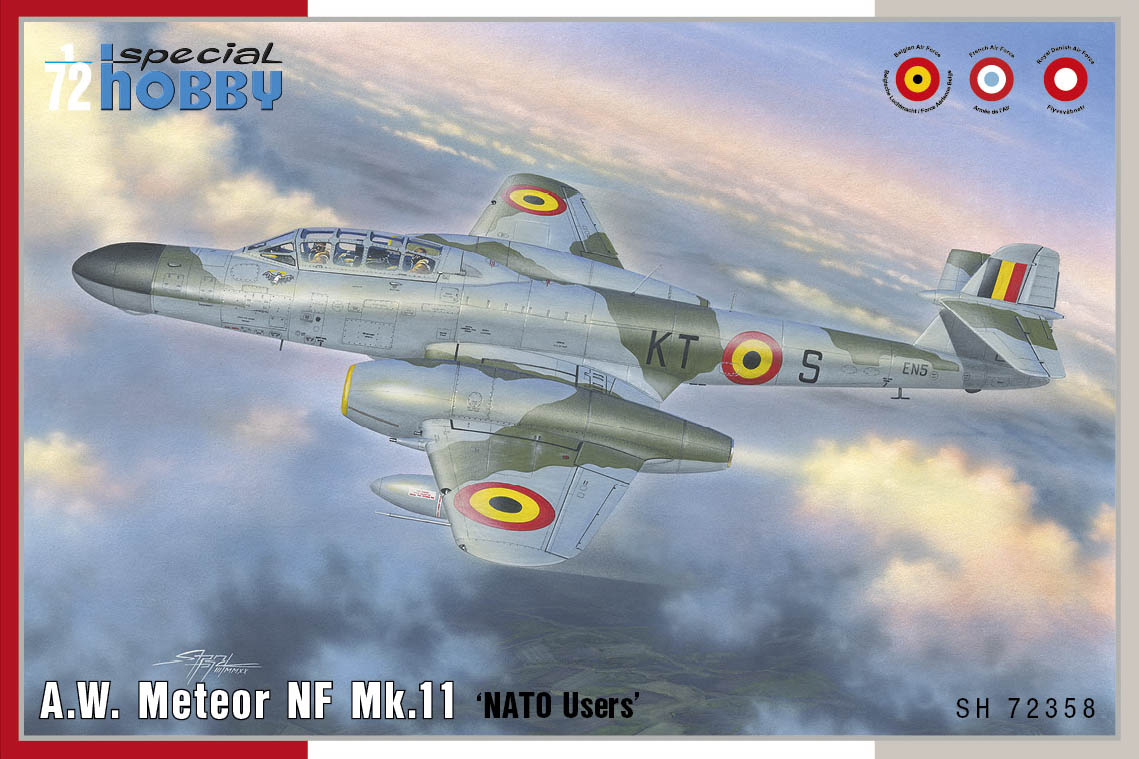
Plastikový model letadla 1/72 A.W. Meteor NF Mk.11 ‘Nato Users’. This British all weather twin jet fighter aeroplane not only served quite a long time with the RAF, it was also exported with considerable success to a number of NATO countries as well as to the Middle East. four grey styrene sprues, one clear plastic sprue. decal sheet covering three options come with a full set of airframe stencils marking options for a Belgian, French and a Danish machines
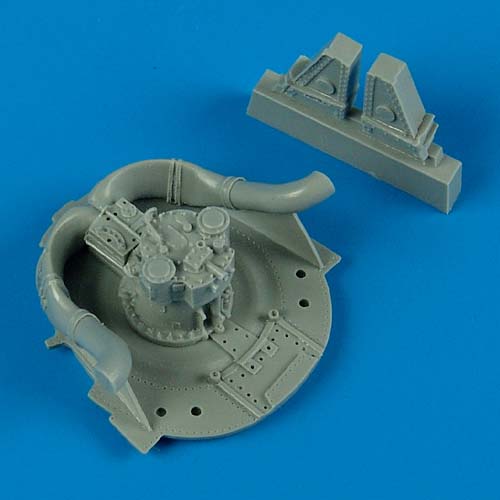
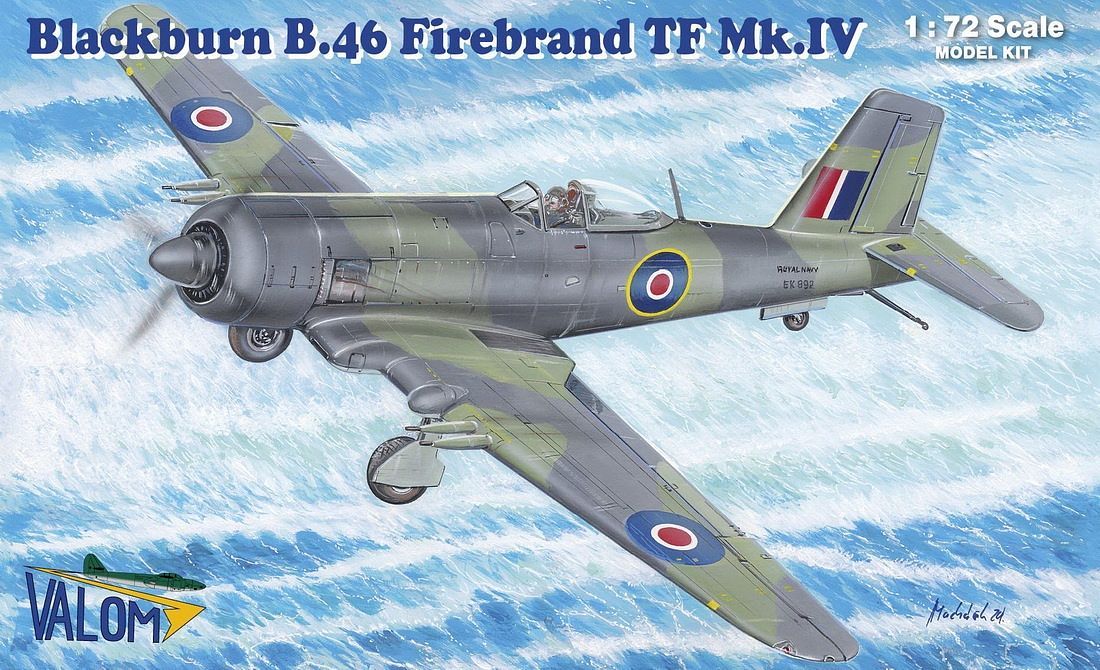
1/72 Blackburn Firebrand TF.Mk.IV. This is an injection-plastic aircraft model kit. The Firebrand is a single-seat aircraft developed by Blackburn Aircraft during World War II, used by the Royal Navy Air Corps. Originally developed as a fighter, it was redesigned as a strike fighter, which took six years, and the first aircraft were not delivered until after the end of the war. The Firebrand TF Mk.IV featured a 2,520bhp Centaurus IX or Centaurus 57 engine. This kit is a completely new mold, and includes resin parts for the cockpit, wheels, etc., as well as photo-etched parts and two types of Royal Navy decals. Will be approximately 16.5cm long with a wingspan of 21.7cm when completed. [Includes]: Resin parts, photo-etched parts, decals for 2 versions
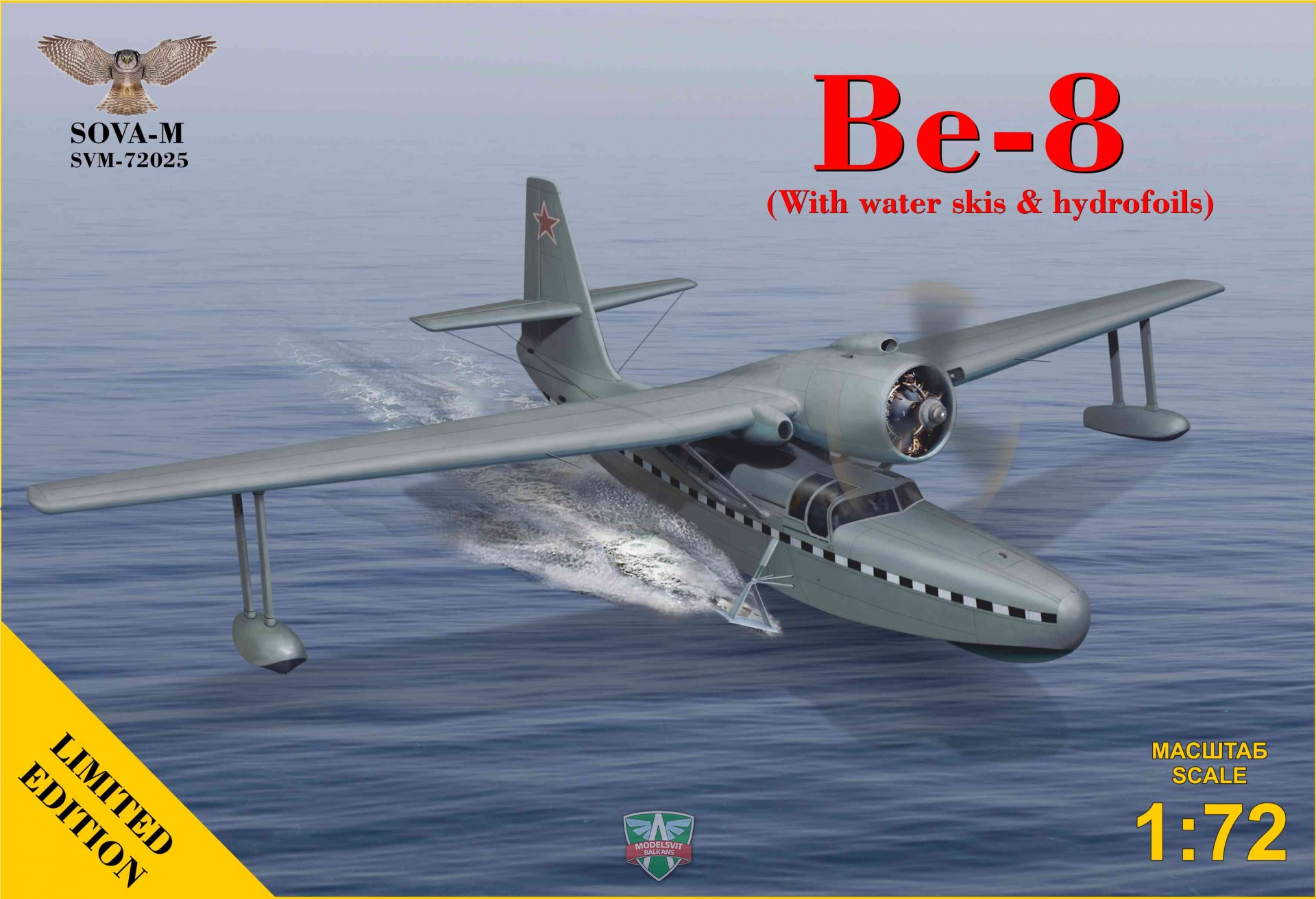
1/72 Be-8 amphibian aircraft (with water skis & hydrofoils). The Beriev Be-8 (USAF/DoD reporting name “Type 33”, NATO reporting name “Mole”), was built by the Soviet Beriev OKB in 1947. It was a passenger/liaison amphibian aircraft with a layout similar to the Be-4 but substantially larger and heavier. It was a single engine parasol with the wing installed on a thin pylon and a pair of short struts. Compared to the Be-4, the Be-8 was equipped with retractable landing gear, and pilot and passenger cabins had heating utilizing engine heat. The Be-8 was intended as a civil aircraft and carried no armament. First flight was on December 3, demonstrating good performance. Two experimental aircraft were built, and one was demonstrated during 1951 Soviet Aviation Day at Tushino.One of Be-8 was equipped with hydrofoils, developed at TsAGI. These “Underwater Wings” were installed on landing gear struts and pushed aircraft above the water well before it could be done by the wing lift force. As a result, takeoff was much easier and imposed less punishment on the hull from the waves. Despite very effective during takeoff hydrofoils had negative impact on flight speed. Construction of retractable hydrofoils was not ready, and the concept did not find practical applications.

1/72 Be-8 passenger amphibian aircraft. The Beriev Be-8 (USAF/DoD reporting name “Type 33”, NATO reporting name “Mole”), was built by the Soviet Beriev OKB in 1947. It was a passenger/liaison amphibian aircraft with a layout similar to the Be-4 but substantially larger and heavier. It was a single engine parasol with the wing installed on a thin pylon and a pair of short struts. Compared to the Be-4, the Be-8 was equipped with retractable landing gear, and pilot and passenger cabins had heating utilizing engine heat. The Be-8 was intended as a civil aircraft and carried no armament. First flight was on December 3, demonstrating good performance. Two experimental aircraft were built, and one was demonstrated during 1951 Soviet Aviation Day at Tushino.One of Be-8 was equipped with hydrofoils, developed at TsAGI. These “Underwater Wings” were installed on landing gear struts and pushed aircraft above the water well before it could be done by the wing lift force. As a result, takeoff was much easier and imposed less punishment on the hull from the waves. Despite very effective during takeoff hydrofoils had negative impact on flight speed. Construction of retractable hydrofoils was not ready, and the concept did not find practical applications.
1/35 Einheitsanhänger 5t. The Anhänger 5T or 5 tonne trailer, known by the official nomenclature of „Einheitsanhanger 5 t Baumuster E 5“ was the standard medium military trailer of the German military throughout the second world war. With a load capacity of 5 tonnes, and an empty weight of approximately 2.5 tonnes, the Anhänger 5t could be seen hauling material anywhere the German military was active. Also utilized by the Luftwaffe and Kriegsmarine for transportation duties, the Anhanger 5t proved so rugged and useful that it continued to serve other masters well after the end of hostilities Highly detailed static plastic model Fine detailed multi disc wheels with sag Side and rear panels buildable in 2 different options (raised or lowered) Specific decalsheet included Drawbar and front axle fully movable
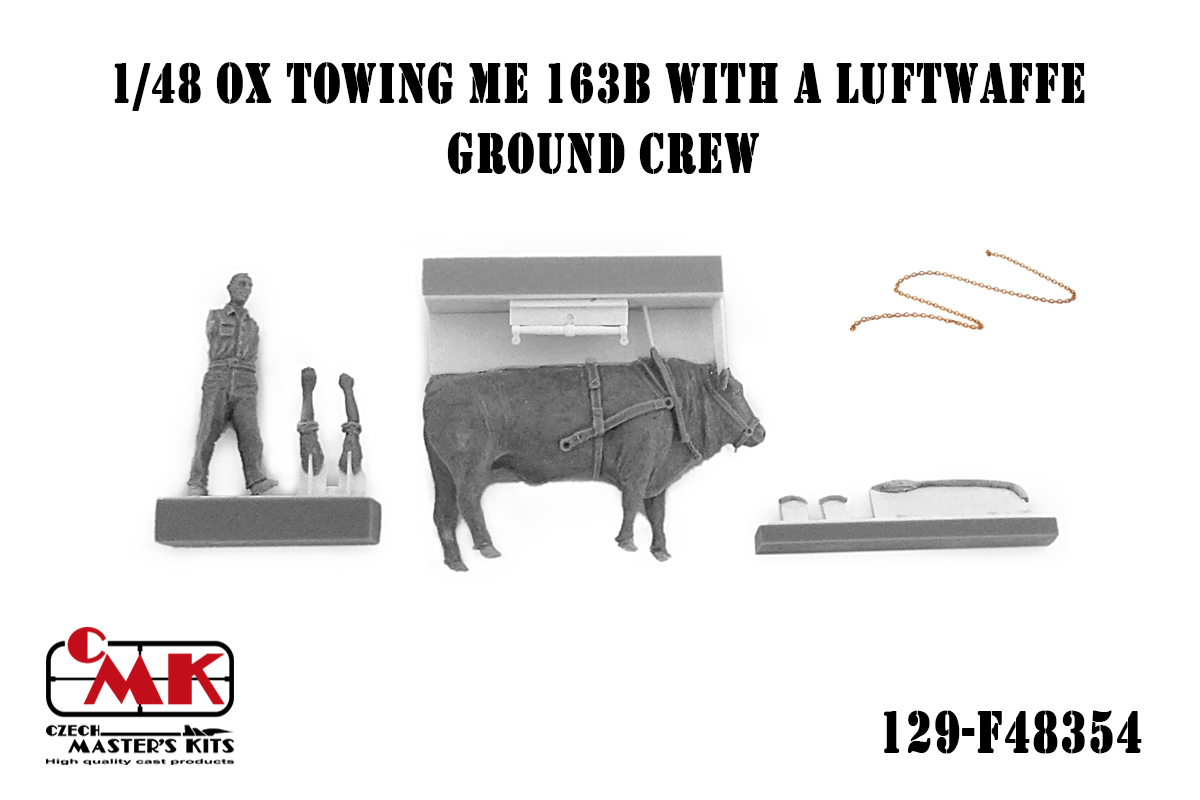
1/48 Ox Towing Me 163B with a Luftwaffe Ground Crew. At the final stages of WW2, the Third Reich faced serious shortage of fuel and to save the maximum amount possible, draft animals were used for taxiing aircraft on airfields, too. Even the most advanced jet and rocket-powered military aircraft such as the Me 262 or Me 163 were often seen in 1945 being towed like a mere middle ages style ox cart. This set contains a figure of a Luftwaffe groundcrew with a draft animal ready to tow a Me 163 Komet on the airfield (the figures have been sculpted based on a period photo. However, a photo of a Bf 109G being towed by such poor animal exists too). The draft animal offered in our set can be used in any other type of diorama as well. Country: Germany / WWII
1/72 Blackburn Firebrand TF.Mk.5. This is an injection-plastic aircraft model kit. The Firebrand is a single-seat aircraft developed by Blackburn Aircraft during World War II, used by the Royal Navy Air Corps. Originally developed as a fighter, it was redesigned as a strike fighter, which took six years, and the first aircraft were not delivered until after the end of the war. This kit is a completely new mold, and includes resin parts for the cockpit, wheels, etc., as well as photo-etched parts and two types of Royal Navy decals. Will be approximately 16.5cm long with a wingspan of 21.7cm when completed. [Includes]: Resin parts, photo-etched parts, decals for 2 versions

1/72 BHU-6B / UF-2 "Albatross" (Japan Maritime Self-Defense Force). The Beriev Be-8 (USAF/DoD reporting name “Type 33”, NATO reporting name “Mole”), was built by the Soviet Beriev OKB in 1947. It was a passenger/liaison amphibian aircraft with a layout similar to the Be-4 but substantially larger and heavier. It was a single engine parasol with the wing installed on a thin pylon and a pair of short struts. Compared to the Be-4, the Be-8 was equipped with retractable landing gear, and pilot and passenger cabins had heating utilizing engine heat. The Be-8 was intended as a civil aircraft and carried no armament. First flight was on December 3, demonstrating good performance. Two experimental aircraft were built, and one was demonstrated during 1951 Soviet Aviation Day at Tushino.One of Be-8 was equipped with hydrofoils, developed at TsAGI. These “Underwater Wings” were installed on landing gear struts and pushed aircraft above the water well before it could be done by the wing lift force. As a result, takeoff was much easier and imposed less punishment on the hull from the waves. Despite very effective during takeoff hydrofoils had negative impact on flight speed. Construction of retractable hydrofoils was not ready, and the concept did not find practical applications.
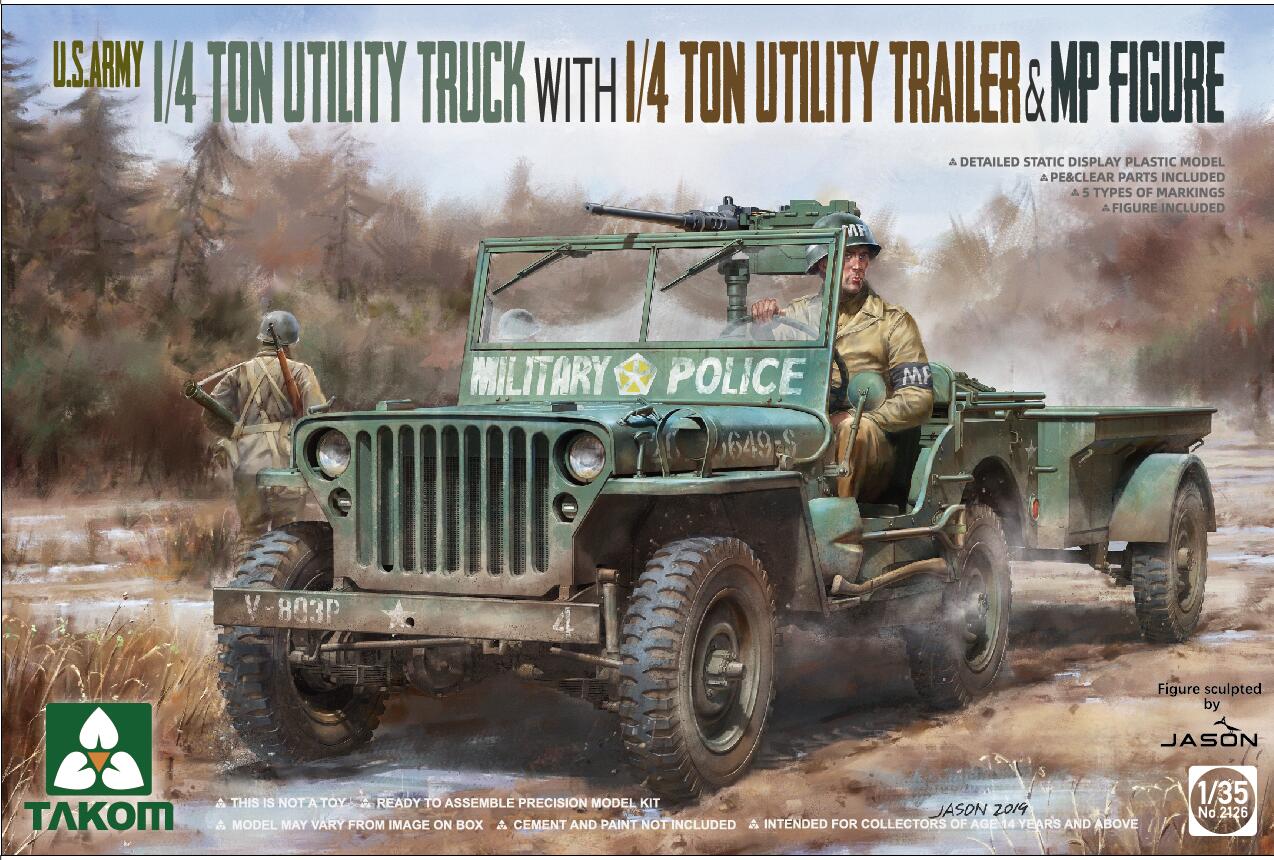
1/35 US Army Jeep + trailer & MP figure. Powered by a 60hp engine, the U.S. Army 1/4-ton trucks were wildly popular off-road capable light utility vehicles, built in large numbers to a standardized design from 1941 to 1945, for the Allied forces in World War II. With an operational range of 300 miles, the 1/4-ton truck became the primary light wheeled transport vehicle of the United States military and its allies in World War II, as well as the postwar period. About 650,000 units were built, constituting a quarter of the total U.S. non-combat motor vehicles produced during the war, with large numbers being provided to U.S. allies. Release Date:Aug 2019 Item Size/Weight:30.3cm x 20.0cm x 5.0cm / 250g

1/72 KDA-2 type 88-1 scout. The Beriev Be-8 (USAF/DoD reporting name “Type 33”, NATO reporting name “Mole”), was built by the Soviet Beriev OKB in 1947. It was a passenger/liaison amphibian aircraft with a layout similar to the Be-4 but substantially larger and heavier. It was a single engine parasol with the wing installed on a thin pylon and a pair of short struts. Compared to the Be-4, the Be-8 was equipped with retractable landing gear, and pilot and passenger cabins had heating utilizing engine heat. The Be-8 was intended as a civil aircraft and carried no armament. First flight was on December 3, demonstrating good performance. Two experimental aircraft were built, and one was demonstrated during 1951 Soviet Aviation Day at Tushino.One of Be-8 was equipped with hydrofoils, developed at TsAGI. These “Underwater Wings” were installed on landing gear struts and pushed aircraft above the water well before it could be done by the wing lift force. As a result, takeoff was much easier and imposed less punishment on the hull from the waves. Despite very effective during takeoff hydrofoils had negative impact on flight speed. Construction of retractable hydrofoils was not ready, and the concept did not find practical applications.

1/72 KDA-2 type 88-2 scout. The Beriev Be-8 (USAF/DoD reporting name “Type 33”, NATO reporting name “Mole”), was built by the Soviet Beriev OKB in 1947. It was a passenger/liaison amphibian aircraft with a layout similar to the Be-4 but substantially larger and heavier. It was a single engine parasol with the wing installed on a thin pylon and a pair of short struts. Compared to the Be-4, the Be-8 was equipped with retractable landing gear, and pilot and passenger cabins had heating utilizing engine heat. The Be-8 was intended as a civil aircraft and carried no armament. First flight was on December 3, demonstrating good performance. Two experimental aircraft were built, and one was demonstrated during 1951 Soviet Aviation Day at Tushino.One of Be-8 was equipped with hydrofoils, developed at TsAGI. These “Underwater Wings” were installed on landing gear struts and pushed aircraft above the water well before it could be done by the wing lift force. As a result, takeoff was much easier and imposed less punishment on the hull from the waves. Despite very effective during takeoff hydrofoils had negative impact on flight speed. Construction of retractable hydrofoils was not ready, and the concept did not find practical applications.

1/72 KDA-2 type 88 light bomber. The Beriev Be-8 (USAF/DoD reporting name “Type 33”, NATO reporting name “Mole”), was built by the Soviet Beriev OKB in 1947. It was a passenger/liaison amphibian aircraft with a layout similar to the Be-4 but substantially larger and heavier. It was a single engine parasol with the wing installed on a thin pylon and a pair of short struts. Compared to the Be-4, the Be-8 was equipped with retractable landing gear, and pilot and passenger cabins had heating utilizing engine heat. The Be-8 was intended as a civil aircraft and carried no armament. First flight was on December 3, demonstrating good performance. Two experimental aircraft were built, and one was demonstrated during 1951 Soviet Aviation Day at Tushino.One of Be-8 was equipped with hydrofoils, developed at TsAGI. These “Underwater Wings” were installed on landing gear struts and pushed aircraft above the water well before it could be done by the wing lift force. As a result, takeoff was much easier and imposed less punishment on the hull from the waves. Despite very effective during takeoff hydrofoils had negative impact on flight speed. Construction of retractable hydrofoils was not ready, and the concept did not find practical applications.
1/72 A-20 Havoc/Wing Racks and Bombs. The A-20 Havoc bombers of the USAAF, and mainly those flown over Europe, were able to carry their bomb load not just internally in the fuselage bomb bays, but under their wings too, using specially designed bomb racks. These racks were uniquely shaped and braced on one side to the wings This set is designed to fit any of the Special Hobby/MPM A-20s, offers the racks as well as the bombs and consists of resin and photo etched parts Operators: USA/WWII, post-WWII
Plastikový model letadla 1/72 SH 89 / CASA C.212 'ASW & Maritime Patrol' . The CASA C.212 is a Spanish turboprop-powered STOL cargo aircraft that has seen service with a wide range of countries and flew in many different roles, one of them being maritime surveillance and patrol. Machines fitted for this sort of tasks carry radar antennae in distinctive, duck beak like shaped radomes at the front of the fuselage as well as some more electronics equipment within the airframe. Highly accurate and nicely detailed model Precisely designed sheet of decals offering markings for two Swedish airframes in different colour schemes, one Malta-based machine and a Spanish one. Specific antenna arrays made of resin and photo-etches Double-slotted wing flaps – resin set no.7407 – is recommended for discerning modeller
1/72 IAF Fouga Magister (and othed planes) - IMI 80mm unguided rockets. This set contains 80mm rocket missiles with two styles of their underwing racks. The fins come on a photo-etched fret. This ordnance was used on Israeli Magisters/Tsukits as well as on a variety of other aeroplanes such as the Spitfire, P-51 Mustang, AT-6 Texan, Ouragan, Mystere IV..... Country of origin: Israel / modern
1/35 2CM SALVENMASCHINENKANONE SMK 18 TYPE 2. This is an injection-plastic field gun model kit. The SMK18 Type 2 2-cm cannon is a high-fidelity gun made by Germany during World War II. The idea was to shoot down enemy aircraft by simultaneously firing eight 2-cm cannons. The Type 1 had the cannons in a horizontal arrangement; the prototype of the Type 2 was built in 1939, but it proved to be too unstable for use, as there was too much of a load on its moving parts. This gun is currently on display in a museum in Moscow, Russia. This kit features highly detailed breech and carriage assemblies, working elevation and sight mechanisms, and a choice of optical or iron sights. The stabilizer arms are movable, and a set of photo-etched parts is included as well. Order yours today! [Includes]: Photo-etched parts
1/48 Siebel Si 204/Aero C-3 Wheels . Main undercarriage wheels and the tailwheel finely cast in resin bring much higher levels of detail to the genuine star of our 2019 range, the 1/48 Siebel Si 204D. Can be used with the upcoming Czech and French versions of the Siebel as well. Country of origin: Germany / WWII
Plastikový model letadla 1/72 Avro Rota C.30A 4 decal v. for Czeczslovak.,RAF, Yugoslavia, Australia. The first production design in the series was the C.30, a radial-engined autogyro with a three-blade, 37 ft (11.3 m) rotor mounted on an aft-leaning tripod, the control column extending into the rear of the two cockpits. The engine was the five-cylinder, 105 hp (78 kW) Armstrong Siddeley Genet Major I used in the C.19 series. The fabric-covered fuselage carried an unbraced tailplane, without elevators but with turned-up tips. The port side of the tailplane had an inverted aerofoil section to counter roll-axis torque produced by the propeller. As with most autogyros, a high vertical tail was precluded by the sagging resting rotor, so the dorsal fin was long and low, extending well aft of the tailplane like a fixed rudder and augmented by a ventral fin. The wide-track undercarriage had a pair of single, wire-braced legs and a small tail wheel was fitted. This model flew in April 1933. It was followed by four improved machines designated C.30P (P here for pre-production) which differed in having a four-legged pyramid rotor mounting and a reinforced undercarriage with three struts per side. The rotor could be folded rearwards for transport. The C.30P used the more powerful (140 hp, 104 kW) seven-cylinder Armstrong Siddeley Genet Major IA radial engine.
Plastikový model letadla 1/72 A.W. Meteor NF Mk.11 ‘Nato Users’. This British all weather twin jet fighter aeroplane not only served quite a long time with the RAF, it was also exported with considerable success to a number of NATO countries as well as to the Middle East. four grey styrene sprues, one clear plastic sprue. decal sheet covering three options come with a full set of airframe stencils marking options for a Belgian, French and a Danish machines
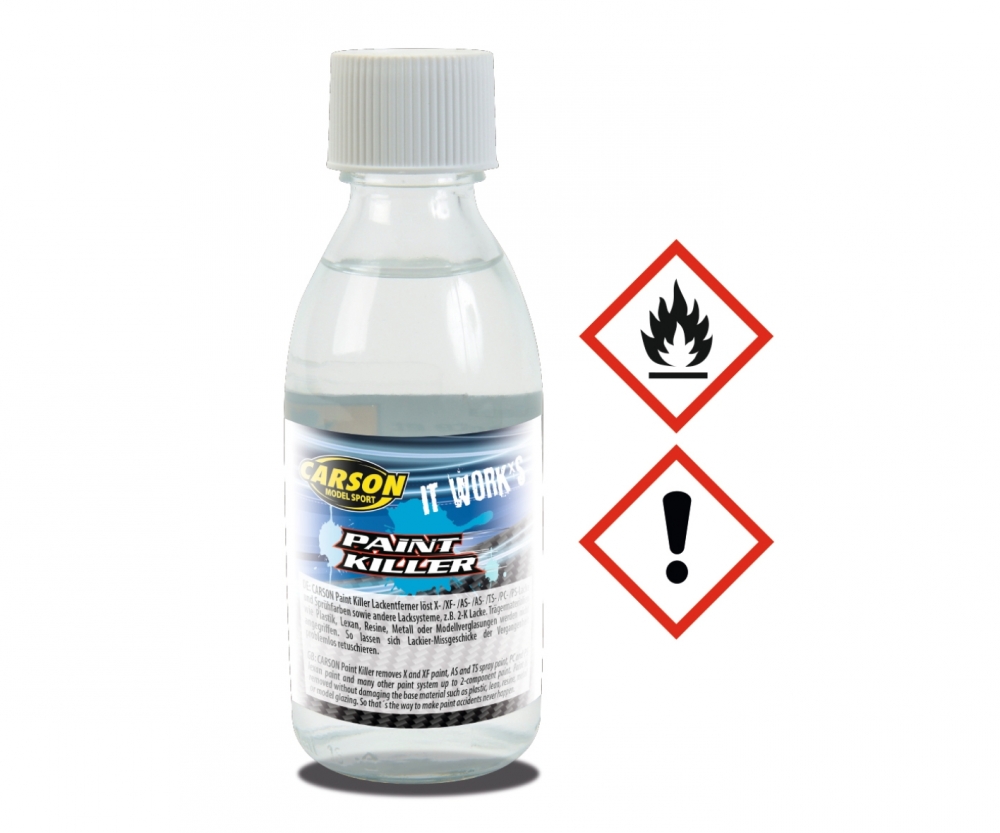
Paint Killer - Color Remover 100ml. This paint remover removes all X-and XV-paints, AS- and TS-spray colours, PC- and PS-lexan colours, as well as all other paint systems up to 2-K paints. The hammer is, that the paints are removed without harming the carrying material like plastic, lexan, resin, metal or model windows. Trials have shown, that even 10-year old Tamiya color acrylic paint paints can be easily removed from tanks, planes or similar models. This means that annoying little paint accidents from the past can be easily corrected. Of course, older polycarbonate-colours can be removed, too.Content: 100 ml. Warning! Not suitable for children under 14 years.
1/72 Blackburn Firebrand TF.Mk.IV. This is an injection-plastic aircraft model kit. The Firebrand is a single-seat aircraft developed by Blackburn Aircraft during World War II, used by the Royal Navy Air Corps. Originally developed as a fighter, it was redesigned as a strike fighter, which took six years, and the first aircraft were not delivered until after the end of the war. The Firebrand TF Mk.IV featured a 2,520bhp Centaurus IX or Centaurus 57 engine. This kit is a completely new mold, and includes resin parts for the cockpit, wheels, etc., as well as photo-etched parts and two types of Royal Navy decals. Will be approximately 16.5cm long with a wingspan of 21.7cm when completed. [Includes]: Resin parts, photo-etched parts, decals for 2 versions
1/72 Be-8 amphibian aircraft (with water skis & hydrofoils). The Beriev Be-8 (USAF/DoD reporting name “Type 33”, NATO reporting name “Mole”), was built by the Soviet Beriev OKB in 1947. It was a passenger/liaison amphibian aircraft with a layout similar to the Be-4 but substantially larger and heavier. It was a single engine parasol with the wing installed on a thin pylon and a pair of short struts. Compared to the Be-4, the Be-8 was equipped with retractable landing gear, and pilot and passenger cabins had heating utilizing engine heat. The Be-8 was intended as a civil aircraft and carried no armament. First flight was on December 3, demonstrating good performance. Two experimental aircraft were built, and one was demonstrated during 1951 Soviet Aviation Day at Tushino.One of Be-8 was equipped with hydrofoils, developed at TsAGI. These “Underwater Wings” were installed on landing gear struts and pushed aircraft above the water well before it could be done by the wing lift force. As a result, takeoff was much easier and imposed less punishment on the hull from the waves. Despite very effective during takeoff hydrofoils had negative impact on flight speed. Construction of retractable hydrofoils was not ready, and the concept did not find practical applications.
1/72 Be-8 passenger amphibian aircraft. The Beriev Be-8 (USAF/DoD reporting name “Type 33”, NATO reporting name “Mole”), was built by the Soviet Beriev OKB in 1947. It was a passenger/liaison amphibian aircraft with a layout similar to the Be-4 but substantially larger and heavier. It was a single engine parasol with the wing installed on a thin pylon and a pair of short struts. Compared to the Be-4, the Be-8 was equipped with retractable landing gear, and pilot and passenger cabins had heating utilizing engine heat. The Be-8 was intended as a civil aircraft and carried no armament. First flight was on December 3, demonstrating good performance. Two experimental aircraft were built, and one was demonstrated during 1951 Soviet Aviation Day at Tushino.One of Be-8 was equipped with hydrofoils, developed at TsAGI. These “Underwater Wings” were installed on landing gear struts and pushed aircraft above the water well before it could be done by the wing lift force. As a result, takeoff was much easier and imposed less punishment on the hull from the waves. Despite very effective during takeoff hydrofoils had negative impact on flight speed. Construction of retractable hydrofoils was not ready, and the concept did not find practical applications.
1/72 BHU-6B / UF-2 "Albatross" (Japan Maritime Self-Defense Force). The Beriev Be-8 (USAF/DoD reporting name “Type 33”, NATO reporting name “Mole”), was built by the Soviet Beriev OKB in 1947. It was a passenger/liaison amphibian aircraft with a layout similar to the Be-4 but substantially larger and heavier. It was a single engine parasol with the wing installed on a thin pylon and a pair of short struts. Compared to the Be-4, the Be-8 was equipped with retractable landing gear, and pilot and passenger cabins had heating utilizing engine heat. The Be-8 was intended as a civil aircraft and carried no armament. First flight was on December 3, demonstrating good performance. Two experimental aircraft were built, and one was demonstrated during 1951 Soviet Aviation Day at Tushino.One of Be-8 was equipped with hydrofoils, developed at TsAGI. These “Underwater Wings” were installed on landing gear struts and pushed aircraft above the water well before it could be done by the wing lift force. As a result, takeoff was much easier and imposed less punishment on the hull from the waves. Despite very effective during takeoff hydrofoils had negative impact on flight speed. Construction of retractable hydrofoils was not ready, and the concept did not find practical applications.
1/35 US Army Jeep + trailer & MP figure. Powered by a 60hp engine, the U.S. Army 1/4-ton trucks were wildly popular off-road capable light utility vehicles, built in large numbers to a standardized design from 1941 to 1945, for the Allied forces in World War II. With an operational range of 300 miles, the 1/4-ton truck became the primary light wheeled transport vehicle of the United States military and its allies in World War II, as well as the postwar period. About 650,000 units were built, constituting a quarter of the total U.S. non-combat motor vehicles produced during the war, with large numbers being provided to U.S. allies. Release Date:Aug 2019 Item Size/Weight:30.3cm x 20.0cm x 5.0cm / 250g